NFPA 660 Dust Hazard Analysis for Combustible Dust Fire and Explosion Risk
Identify, document, and control combustible dust hazards before they become an OSHA, insurance, fire-code, or AHJ problem.
Combustible dust hazards can exist anywhere powders, fines, fibers, flakes, or particulate solids are generated, handled, processed, conveyed, collected, dried, milled, blended, packaged, or stored. A Dust Hazard Analysis, commonly called a DHA, is the technical process used to identify where combustible dust fire, flash fire, and explosion hazards may exist and what safeguards are needed to reduce risk.
HazBasis Process Safety provides Dust Hazard Analysis services for manufacturing, processing, and laboratory facilities that need NFPA 660 compliance support, OSHA combustible dust risk evaluation, fire-code documentation, insurance review support, and AHJ-ready technical reports.
Have questions about your facility’s combustible dust risk? Reach out and we’ll help.
What Is a Dust Hazard Analysis
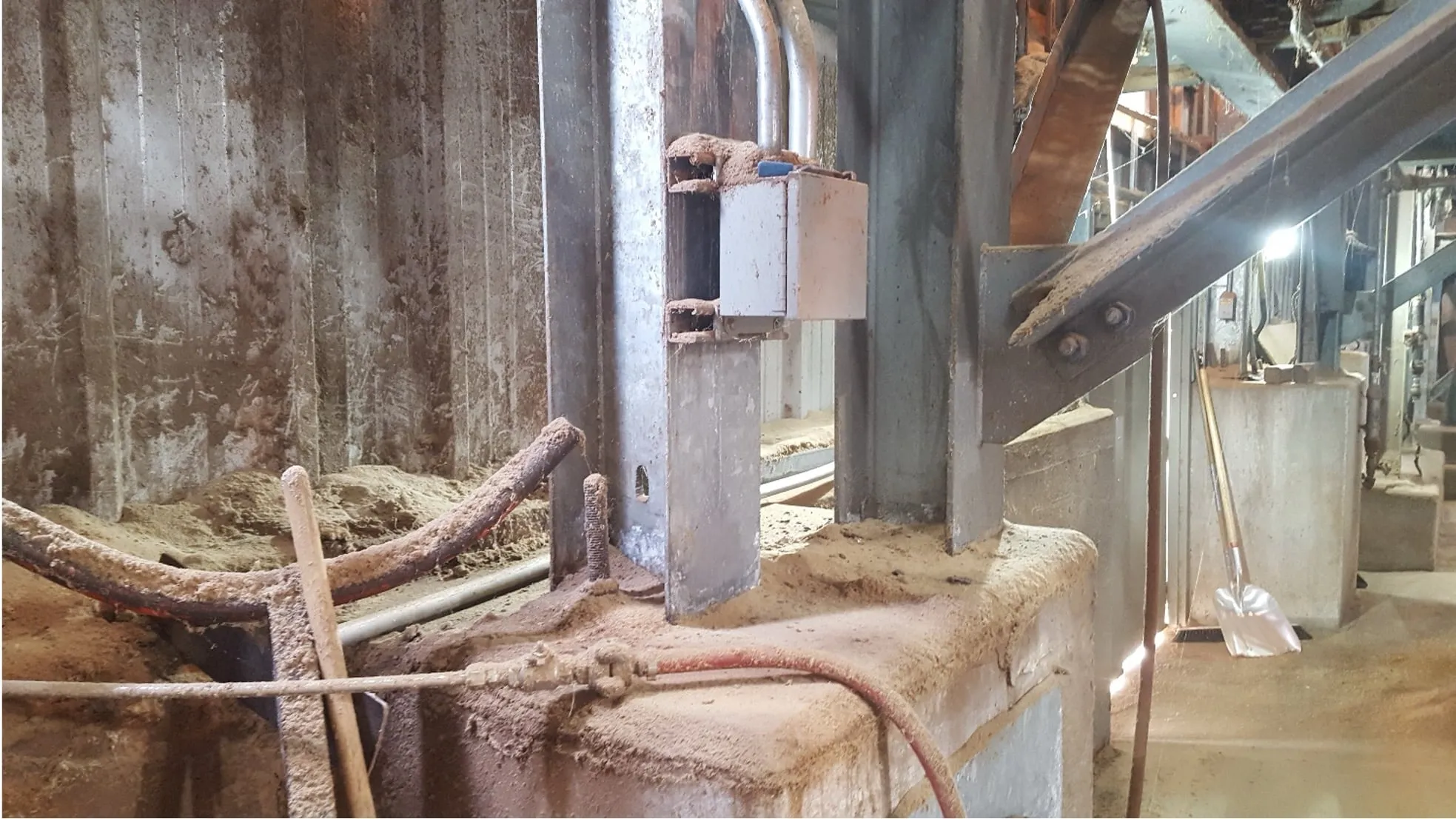
A dust explosion rarely begins with a dramatic warning. It often starts with a thin layer of dust accumulating on a structural beam that no one has been assigned to clean, near a bearing that has been operating slightly above its normal temperature for months. A Dust Hazard Analysis identifies that dust accumulation and that potential ignition source before they come together.
More formally, a Dust Hazard Analysis, or DHA, is a systematic engineering review of combustible dust hazards within a facility or process. It is used to identify credible fire, flash-fire, and dust-explosion scenarios, evaluate potential ignition sources and dust-release mechanisms, and determine whether existing prevention and mitigation safeguards are adequate. NFPA 660 requires facilities that handle combustible particulate solids to complete and maintain a DHA.
A proper DHA looks at several things: the dust itself, including test data, particle size, and ignition sensitivity; the equipment that generates or contains it; how it escapes into the building; what could ignite it; and what’s currently in place to stop a fire from becoming an explosion. It draws on:
- Combustible dust properties
- Dust generation and accumulation points
- Dust collectors, baghouses, ductwork, and pneumatic conveying
- Mills, grinders, dryers, mixers, blenders, screeners, and packaging equipment
- Silos, bins, hoppers, and enclosures
- Ignition sources, electrical area classification, and grounding
- Explosion venting, suppression, isolation, and containment
- Housekeeping, maintenance, and management of change
It’s not a walkthrough with a clipboard. It should be grounded in actual process conditions, test data, and equipment configuration, not a generic checklist applied the same way to every facility.
Signs Your Facility May Need a DHA
Most DHA projects start one of a few ways:
- Your insurer, fire marshal, AHJ, or corporate safety group requested a combustible dust review
- You’re designing, modifying, or installing a dust collector or a new process line
- You’ve noticed visible dust accumulation and aren’t sure how serious it is
- You had a fire, flash fire, smoldering event, or dust collector incident, even a small one
- You handle powder, fines, fibers, or particulate solids and have never had a DHA done
- You need NFPA 660 compliance documentation on file
If any of these sound familiar, a DHA is usually the right starting point. It’s what determines which safeguards you actually need, rather than guessing.
DHA for OSHA, NFPA 660, Insurance, and Fire-Code Review
A Dust Hazard Analysis is only valuable if it can withstand review by someone outside your organization—whether that is an OSHA inspector, insurance underwriter, fire marshal, authority having jurisdiction, or corporate safety auditor. That is the standard to which we prepare every DHA.
A well-developed DHA provides a documented technical basis for NFPA 660 compliance, supports responses to OSHA inspections and insurance recommendations, and converts combustible dust concerns into a prioritized, actionable plan for risk reduction and capital improvement. Rather than leaving the facility with an open-ended list of deficiencies, the report identifies what requires immediate attention, what can be addressed through procedural or maintenance improvements, and what may require longer-term engineering investment.
A DHA also establishes an important baseline for future management of change. When equipment, materials, operating conditions, or building layouts change, the facility has a clear record of what was evaluated, what hazards were identified, what safeguards were considered, and what corrective actions were implemented.
The strongest DHA reports integrate field observations, process safety engineering judgment, applicable combustible dust test data, and practical recommendations that the facility can realistically implement. They do not rely on generic checklists or repeat the same best-practice language from one site to another. Each recommendation should be specific to the facility, technically justified, and aligned with the actual hazards, operations, and risk profile of the site.
Our DHA Process
Step 1 — Project Kickoff We begin by confirming the scope, facility areas, materials, equipment, and compliance objective (OSHA, NFPA 660, insurer, AHJ, or internal). To support the review, we typically request available process flow diagrams, equipment lists, safety data sheets, previous DHA reports, combustible dust test data, and relevant incident or near-miss history.
Step 2 — Site Walkdown We walk the process areas, dust collection systems, transfer points, and storage, looking specifically at fugitive dust release points and accumulation, ignition sources, and existing protection equipment, not just taking a general tour.
Step 3 — Hazard Scenario Review We identify the credible fire, flash fire, and explosion scenarios for your facility specifically, such as a collector deflagration, a mill ignition, or a fugitive dust secondary explosion, and trace each one from initiating event to consequence to existing safeguard.
Step 4 — Safeguard Evaluation For each scenario, we assess whether current safeguards, including venting, suppression, isolation, housekeeping, grounding, and procedures, are actually adequate, not just present.
Step 5 — Report and Recommendations You get a written report with a hazard scenario table, risk-ranked recommendations, photos, and documentation suitable for AHJ, insurer, or OSHA review.
Our Dust Hazard Analysis Scope
Material Hazard Review
We review the dusts, powders, fines, and particulate solids handled in the facility. Where test data exists, we evaluate properties like Kst, Pmax, Minimum Explosible Concentration, Minimum Ignition Energy, Minimum Ignition Temperature, layer ignition behavior, particle size, moisture content, and resistivity. If data is missing or outdated, we identify what testing is needed.
Process and Equipment Review
We evaluate the equipment and operating conditions that generate, suspend, collect, or confine combustible dust, including dust collectors, ductwork, mills, dryers, mixers, bucket elevators, screeners, packaging lines, and silos. The focus is on credible scenarios, not just the presence of dust.
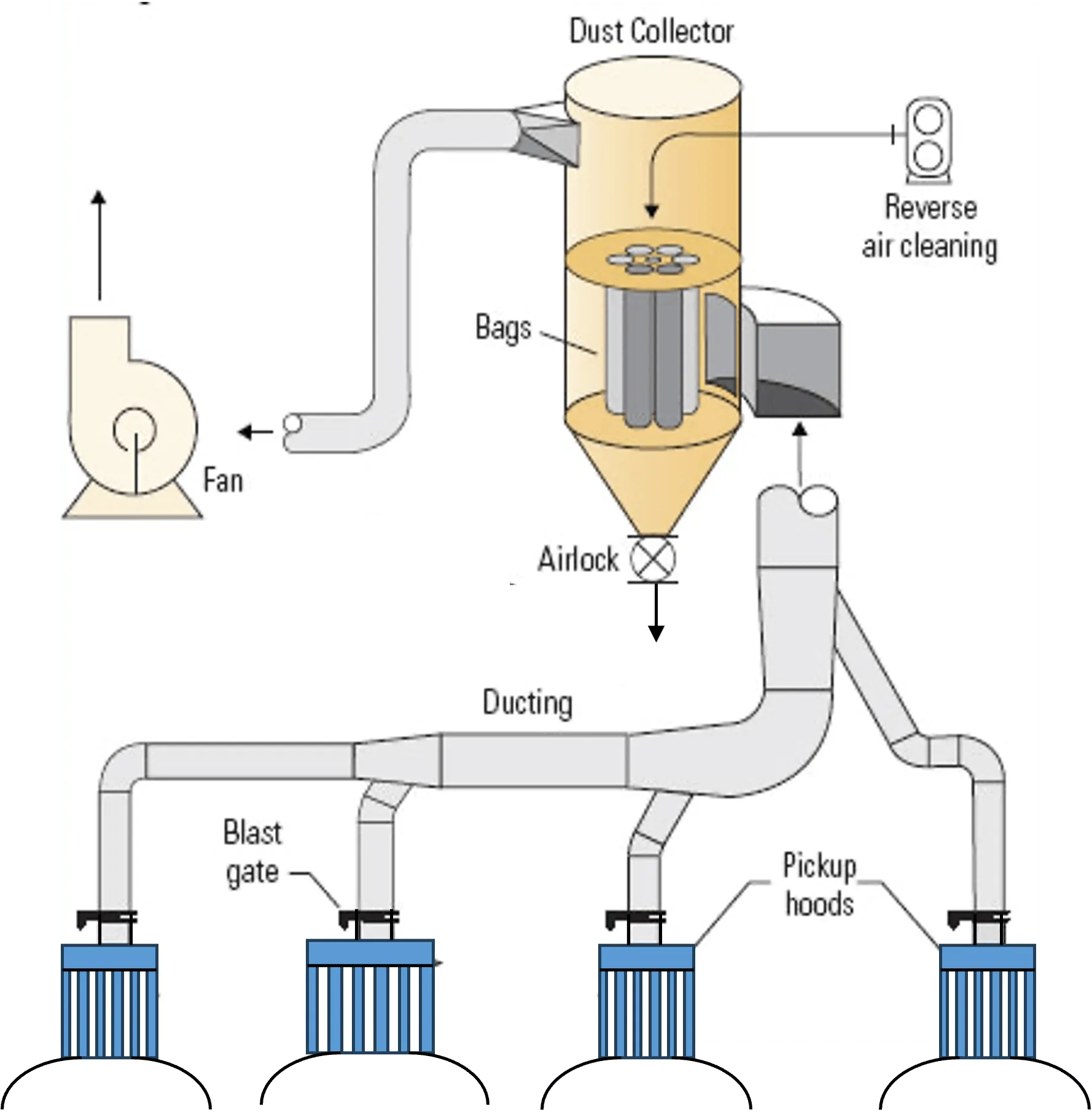
Dust Collector and Ductwork Hazard Review
Dust collectors are often the highest risk point in a system, since they combine suspended dust, ignition sources, and confined volume in one place. We review location, venting, isolation, spark detection, filter changeout practices, duct velocity, and whether air is recirculated into the building. A collector shouldn’t be treated as a housekeeping device when it’s functioning as explosion-prone process equipment.
Fugitive Dust and Housekeeping Review
Even when an explosion starts inside equipment, dust accumulated on floors, beams, cable trays, and ledges can fuel a much larger secondary event. We look at release points, accumulation surfaces, cleaning methods and frequency, and whether dust is migrating into areas it shouldn’t. Housekeeping here isn’t just about cleanliness. It’s an explosion prevention measure.
Ignition Source Evaluation
We assess whether credible ignition sources, such as hot surfaces, mechanical sparks, static electricity, electrical equipment, hot work, smoldering material, and self-heating materials, are adequately controlled for the dust hazards present.
Explosion Protection and Prevention Review
Depending on the scenario, safeguards may include venting, suppression, isolation, inerting, grounding and bonding, hot work controls, or process interlocks. We identify where safeguards are required and whether what’s currently installed is technically adequate.
Hazardous Area Classification Support
Where dust clouds or accumulations can create ignitable atmospheres, such as around collectors, transfer points, mills, or filling stations, we support electrical area classification based on actual release potential, ventilation, and equipment configuration.
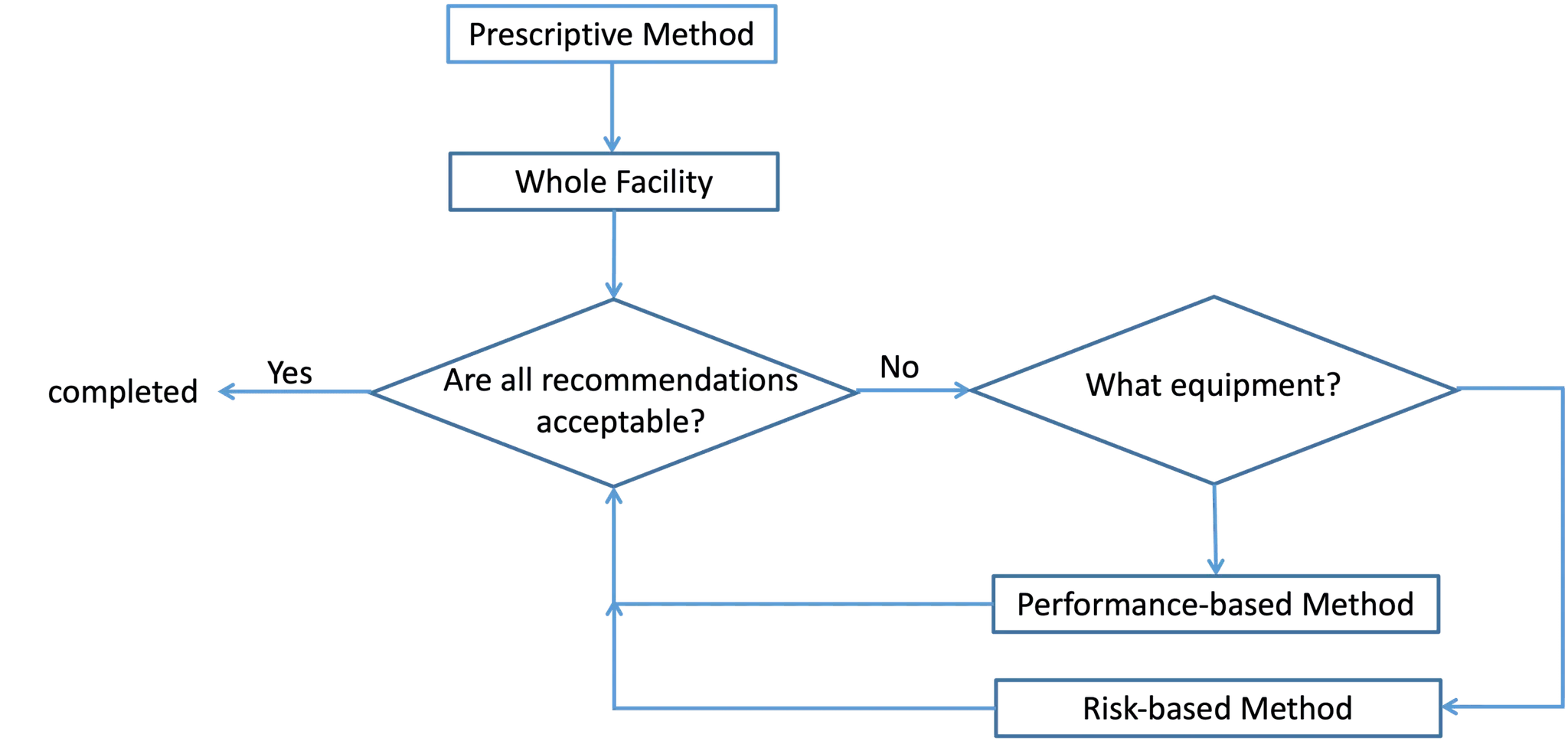
What Answers Our Report Will Provide
Our DHA reports are written to answer the questions that come up during fire-code review, insurance review, or regulatory inspection:
- What combustible dust materials are present, and how hazardous are they?
- Where are the credible dust fire and explosion hazards in this facility?
- What equipment can generate or contain explosible dust clouds?
- Are dust collectors properly located and protected?
- Is explosion venting, suppression, isolation, or containment required?
- Are housekeeping practices and ignition-source controls adequate?
- Is hazardous area classification required?
- What corrective actions are needed, and which are highest priority?
- What documentation should be kept on file for compliance?
We don’t replace the AHJ or issue permits. We provide the technical analysis and documentation that supports AHJ review and facility decision-making.
Why Choose HazBasis
HazBasis brings together process safety expertise, combustible dust testing knowledge, fire and explosion hazard analysis, and practical facility engineering experience under one roof, so you’re not coordinating between separate specialists for each piece of the puzzle.
Our reports are built around a few things we don’t compromise on:
- Technical and defensible, not a generic checklist
- Written to be AHJ ready
- OSHA aware and aligned with NFPA 660
- Practical enough that facility teams actually implement the recommendations
- Clear to anyone who picks it up, from an engineer to an executive to an insurer
That last point matters more than it sounds. An engineer, an EHS manager, an executive, an insurer, and a reviewer can each pick up the same report and get what they need from it.
That works because we understand how laboratory data, field conditions, process equipment, dust collectors, ignition sources, and explosion protection design all connect. Missing any one of those pieces is usually where a DHA falls apart.
Our objective isn’t to produce a generic report. It’s to help your facility understand its actual combustible dust risk and put safeguards in place that work.
FAQ
What is a Dust Hazard Analysis?
A Dust Hazard Analysis is a systematic review used to identify combustible dust fire, flash fire, and explosion hazards and determine what safeguards are needed.
Is a DHA required?
A DHA may be required or expected when a facility handles combustible dust or combustible particulate solids. It is commonly requested for NFPA compliance, OSHA inspections, insurance reviews, corporate audits, and AHJ plan review.
Who should perform a DHA?
A DHA should be performed by a qualified person with knowledge of combustible dust hazards, process equipment, fire and explosion protection, applicable standards, and the specific industry or process being evaluated.
What facilities need a DHA?
Facilities that process, handle, transfer, collect, dry, grind, mill, blend, package, or store combustible powders, dusts, fibers, flakes, or particulate solids may need a DHA.
What is included in a DHA?
A DHA typically includes material hazard review, process equipment review, ignition source evaluation, dust collector review, fugitive dust evaluation, explosion protection review, and risk-ranked recommendations.
Is combustible dust testing needed before a DHA?
Combustible dust testing is often needed when material properties are unknown or when engineering design data is required. A DHA can identify which tests are needed, such as Kst, Pmax, MIE, MEC, MIT, or LOC.
Can a DHA help with OSHA inspection?
Yes. A DHA provides structured documentation of combustible dust hazards, safeguards, and corrective actions. It can support OSHA inspection readiness and demonstrate that the facility is actively evaluating and managing combustible dust hazards.
Can a DHA help with AHJ or fire marshal review?
Yes. An AHJ-ready DHA report can help explain the combustible dust hazards, existing safeguards, and recommended corrective actions in a format suitable for fire-code and permit review.
How often should a DHA be updated?
A DHA should be reviewed and updated when there are significant process changes, material changes, equipment changes, dust collector modifications, incidents, near misses, or changes in applicable standards or enforcement expectations.
What is the difference between combustible dust testing and DHA?
Combustible dust testing determines the fire and explosion properties of the dust. A DHA uses that data, together with process and facility information, to identify hazards and determine safeguards.