What This Test Answers
This test identifies thermal events that occur when a material is heated under controlled conditions, including exothermic activity, decomposition behavior, melting, crystallization, and other thermal transitions. The result applies to the submitted sample, preparation, conditioning, and test conditions documented in the report.
DSC provides an efficient screening assessment of thermal behavior, but it does not replace larger-scale testing when the decision involves runaway severity, pressure generation, or emergency relief design.
Not sure if DSC testing is the right first step for your material? Reach out and we’ll help you scope the testing.
Test Method and Standard
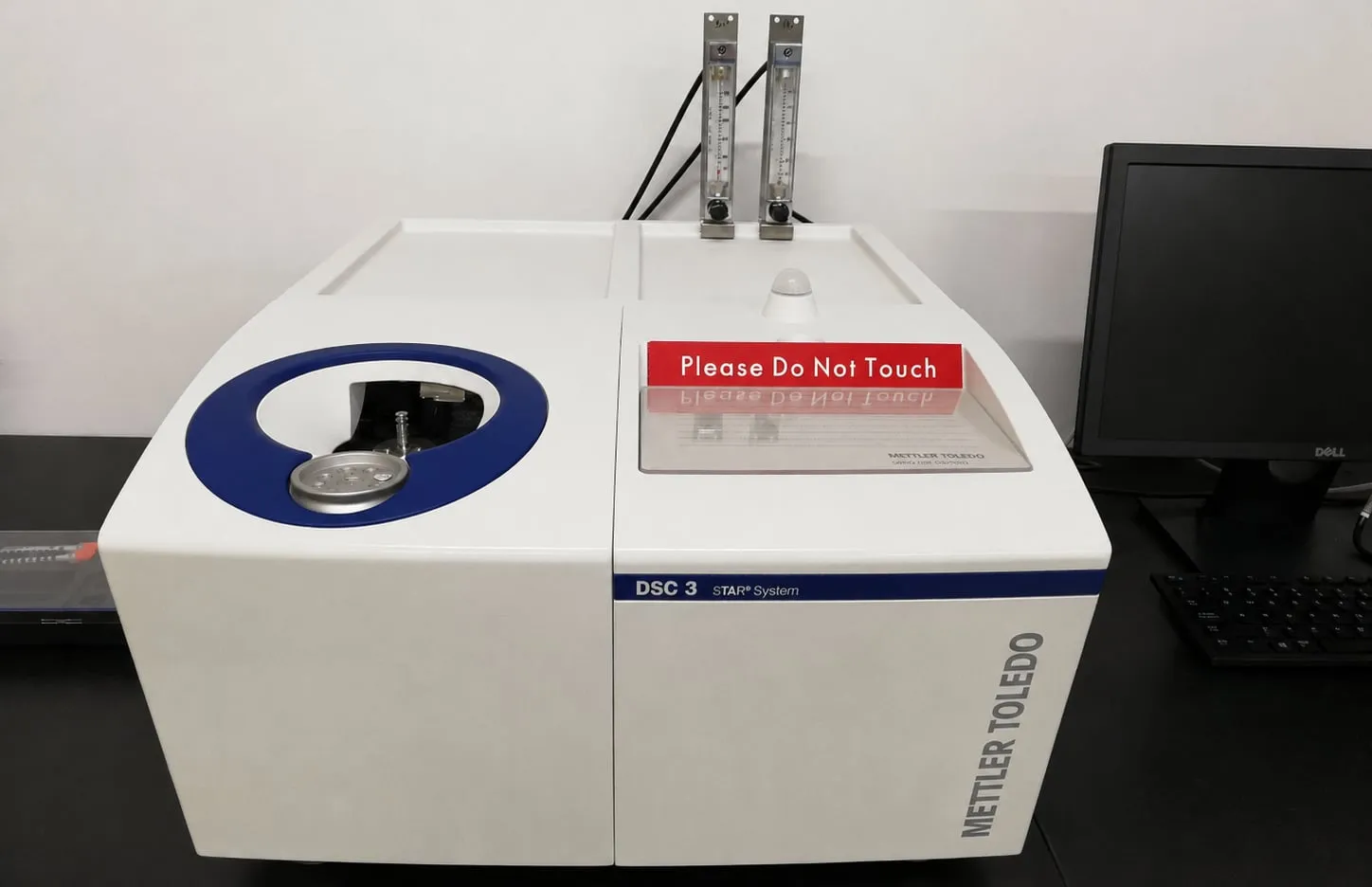
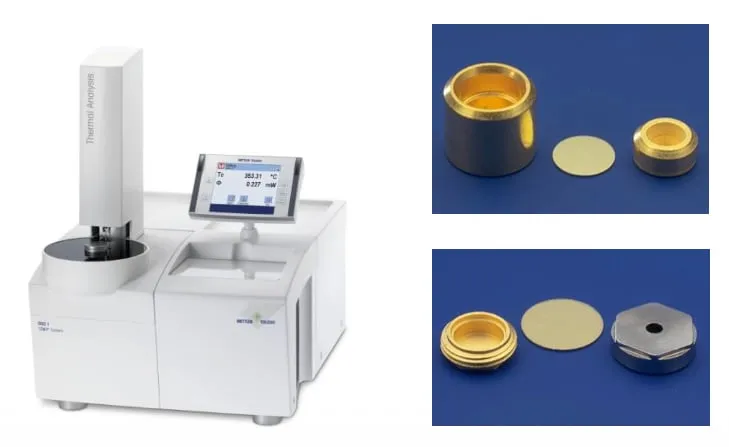
The sample is analyzed using a Differential Scanning Calorimeter under a controlled temperature program. Heat-flow changes between the sample and a reference are measured as the material is heated, cooled, or held at defined conditions.
Testing conditions, including sample preparation, temperature range, heating rate, atmosphere, and method selection, are established based on the material type, expected behavior, and project objective. The quotation identifies the testing approach before work begins.
What You Receive
- DSC thermograms and documented test conditions
- Identification of thermal events, including exothermic and endothermic behavior
- Reported onset temperatures, peak temperatures, and heat values where applicable
- Comparison of samples, formulations, or conditions when included in scope
- Process safety interpretation and recommended next steps
How the Data Supports Decisions
DSC data helps identify materials that may require additional evaluation before scale-up, processing, storage, or handling.
The results support preliminary temperature-limit decisions, formulation comparisons, process development, PHA/HAZOP reviews, and selection of follow-up testing such as ARC, reaction calorimetry, compatibility testing, or VSP evaluation.
When to Order This Test
- A chemical, formulation, intermediate, or waste stream requires initial thermal hazard screening
- A new material or supplier change may affect thermal stability
- A process involves heating, drying, concentration, curing, or storage at elevated temperatures
- Unexpected heat release, discoloration, decomposition, or other thermal behavior has been observed
- A PHA, HAZOP, MOC, or scale-up review identifies a need for additional thermal data
Sample Submission Guidance
Sample requirements depend on material form, expected behavior, and the selected testing approach. HazBasis confirms the appropriate quantity and preparation requirements before testing begins.
Include the SDS, composition or trade-name information, physical form, process description, expected operating conditions, and the specific safety question the testing needs to address.
Why Choose HazBasis
DSC is most valuable when the results are connected to the right safety decision. HazBasis combines thermal analysis capabilities with process safety expertise to help clients understand what screening results mean for their materials and processes.
We use DSC as part of a focused testing strategy—not simply as a standalone measurement—to help identify risks early, determine when additional evaluation is needed, and support safer process development, scale-up, and operation.
FAQ
When should DSC testing be used?
Use DSC when you need rapid thermal screening of a chemical, mixture, formulation, intermediate, product, or waste stream, especially before selecting more detailed calorimetry.
Is DSC sufficient for runaway reaction evaluation?
Usually not by itself. DSC can reveal exothermic activity and energy, but adiabatic behavior, pressure generation, time-to-maximum-rate, process heat release, or vent sizing generally requires other methods.
Can DSC compare two formulations or suppliers?
Yes. Testing samples under the same protocol can identify meaningful differences in melting, thermal transitions, exothermic onset, peak temperature, and heat release.
Can liquid and solid samples be tested?
Many liquids, solids, pastes, and formulations can be evaluated, subject to compatibility with the instrument, sample holder, pressure limitations, and laboratory acceptance review.
How is DSC data used to establish a safe operating limit?
The result is combined with process conditions, kinetics, scale, residence time, heat removal, uncertainty, and follow-up data. It should not be converted directly into an operating limit without engineering review.