

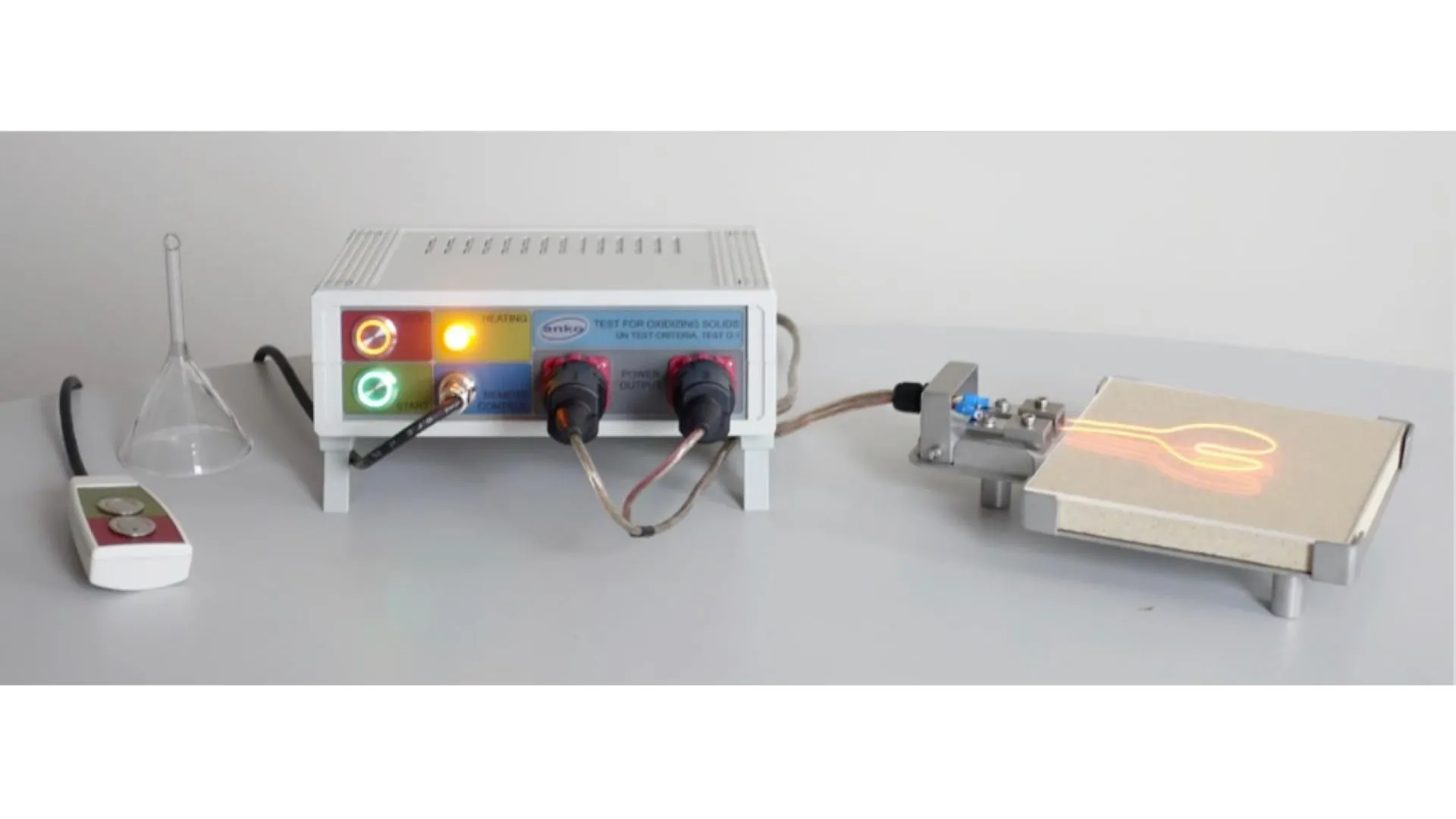
What Oxidizing Solids Testing Answers
This test compares the burning behavior of a substance-cellulose mixture with defined reference mixtures, to support Division 5.1 classification and packing group. The result applies to the submitted sample, preparation, conditioning, and test conditions stated in the report. As with any single lab value, we’re careful not to generalize it as a universal property of the material, since particle size, moisture, temperature, pressure, geometry, and formulation can all shift the outcome.
Not sure if your material needs oxidizer classification testing? Reach out and we’ll help you scope it.
Test Method and Standard
The test substance is mixed with dried fibrous cellulose at specified ratios and formed into a defined conical pile. Burning behavior is measured and compared against potassium bromate reference mixtures under the UN procedure. Testing follows UN Manual of Tests and Criteria Test O.1 or an agreed project specific method, and the quotation identifies the governing method before work begins.
What You Receive
- Burning time results for the test and reference mixtures
- Classification and packing group comparison
- Documented sample preparation, ratios, and observations
How the Data Supports Decisions
This result supports Division 5.1 classification, packaging, and labeling, informs storage segregation from fuels, organics, and reducing agents, and feeds SDS and transport documentation.
When to Order This Test
- A solid may release oxygen or intensify combustion of other materials
- A new formulation requires transport classification
- Changes in purity, particle size, or additives may affect oxidizing behavior
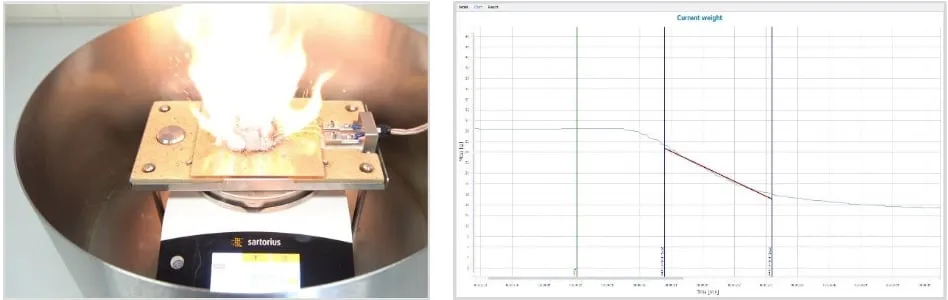
Sample Submission Guidance
The method uses multiple 30 g mixtures plus screening and repeats. HazBasis confirms the total sample quantity and cellulose or reference material requirements once scope is defined. Include the SDS, composition or trade name information, physical form, process description, and whether the sample should be tested as received or prepared to a different condition.
Why Choose HazBasis
- The classification comes from a direct comparison against reference mixtures, not an absolute measurement, so getting the reference series and repeat testing right matters as much as testing the substance itself. We run the full comparison carefully rather than treating the reference side as a formality.
- Particle size and purity can shift oxidizing behavior meaningfully, so where a formulation or supplier change is the reason for testing, we document the specific lot tested clearly enough that the classification can be defended against exactly that material.
- Once Division 5.1 status is confirmed, the practical question is usually storage segregation, what this material can’t sit next to, and we carry that interpretation through rather than stopping at the classification number alone.
FAQ
What does Oxidizing Solids testing measure?
Compares the burning behavior of a substance-cellulose mixture with defined reference mixtures to support division 5.1 classification and packing group.
Which standard will be used?
UN Manual of Tests and Criteria, Test O.1. The final method depends on the sample, project objective, and any customer or regulatory requirements.
Is an oxidizing solid necessarily combustible by itself?
No. An oxidizer can promote or intensify combustion of other materials even if it is not readily combustible on its own.