What Burn Rate / Fire Train Testing Answers
This test evaluates whether a solid or powder propagates burning along a defined train, supporting transport or general combustibility classification. The result applies to the submitted sample, preparation, conditioning, and test conditions stated in the report. As with any single lab value, we’re careful not to generalize it as a universal property of the material, since particle size, moisture, temperature, pressure, geometry, and formulation can all shift the outcome.
Not sure if this is the right follow-up test? Reach out and we’ll help you scope it.
Test Method and Standard
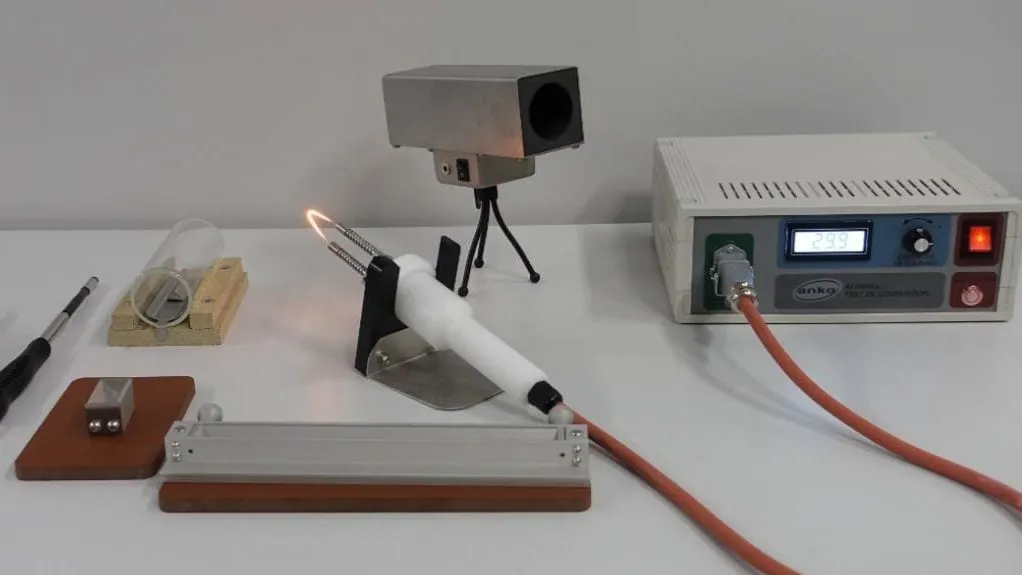
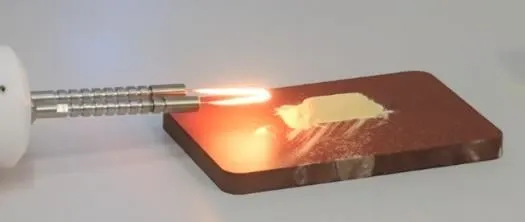
The material is tested in its commercial form unless a different preparation is required. A defined powder train is formed on a low heat conducting surface, ignited at one end, and observed for flame propagation, smoldering, and burning time. Water wetting behavior may also be assessed when the classification procedure calls for it. Testing follows UN Manual of Tests and Criteria Test N.1, VDI 2263 where applicable, or an agreed project specific method, and the quotation identifies the governing method before work begins.
What You Receive
- Screening and full burn rate observations
- Measured burning time and propagation behavior
- Classification oriented interpretation and recommended follow-up
How the Data Supports Decisions
This result supports UN Division 4.1 or packing group evaluation where applicable, informs fire and flash fire precautions for non-explosible powders, and helps determine whether additional self-heating or dust cloud testing is needed.
When to Order This Test
- A dust received a No-Go explosibility result but may still burn
- Dangerous goods classification is required
- You need data on propagation from hot particles, friction, or open flame
Sample Submission Guidance
Approximately 100 g is commonly sufficient for initial testing, though additional material may be needed for repeats or packing group classification. Include the SDS, composition or trade name information, physical form, process description, and whether the sample should be tested as received or prepared to a different condition.
Why Choose HazBasis
- A Go/No-Go dust explosibility result and a burn rate result answer two different questions. A powder can fail to produce a dust cloud deflagration and still burn rapidly as a layer or train, and we make sure that distinction is clear in the report rather than left for you to reconcile.
- Burning time and propagation behavior are documented precisely, since packing group decisions often hinge on exactly where the result falls relative to a threshold.
- Where the result points toward a dangerous goods classification, we can carry that conclusion through to shipping documentation and SDS Section 14 without you having to translate it yourself.
FAQ
What does Burn Rate testing measure?
Evaluates whether a solid or powder propagates burning along a defined train and supports transport or combustibility classification.
Which standard will be used?
UN Manual of Tests and Criteria, Test N.1; VDI 2263 where applicable. The final method depends on the sample, project objective, and any customer or regulatory requirements.
Why test burn rate after a No-Go dust explosibility result?
A powder can fail to produce a dust-cloud deflagration yet still burn rapidly as a layer or train. The two tests answer different hazard questions.