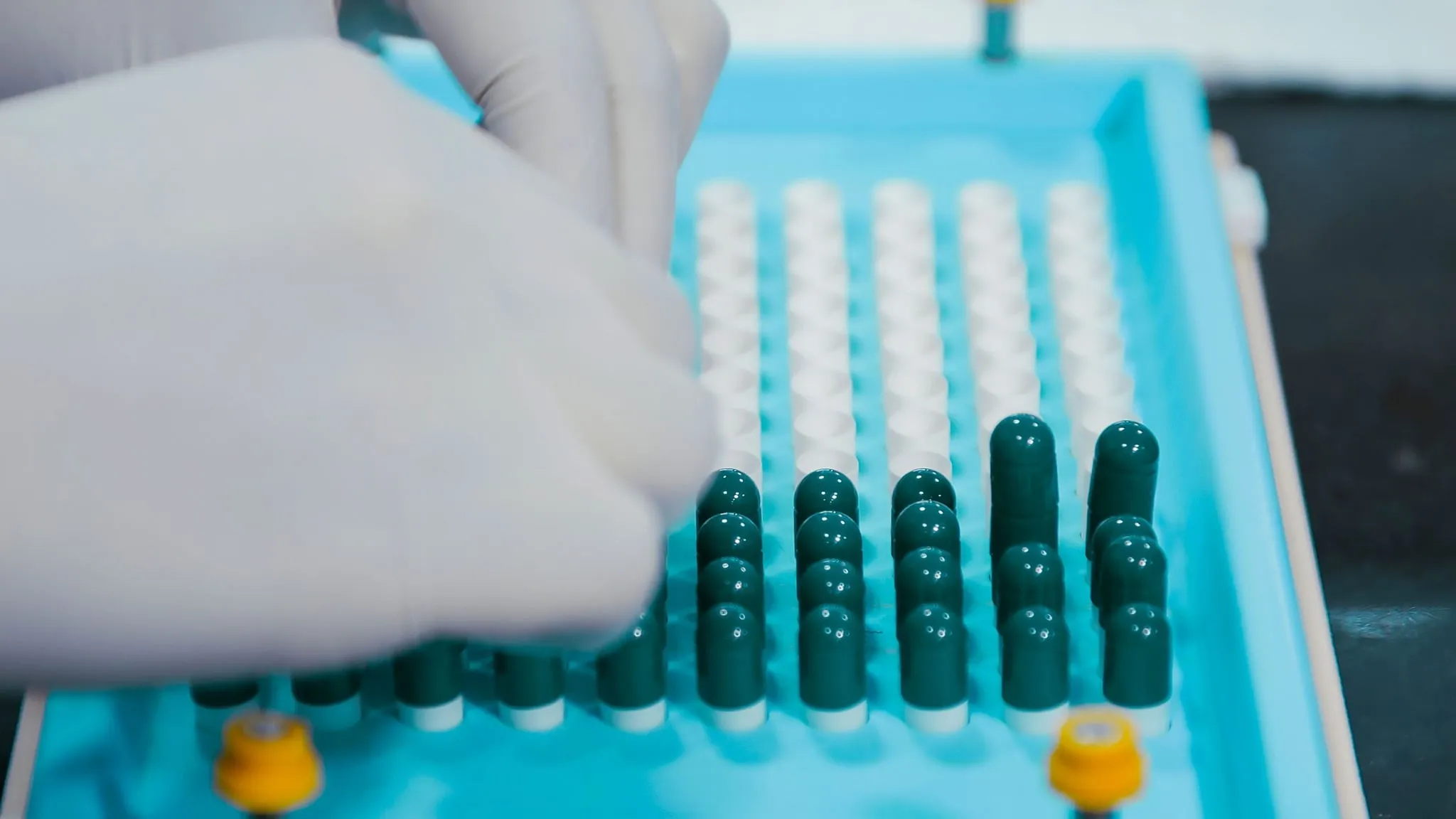
Pharmaceutical manufacturing combines nearly every hazard category on this page inside a single, tightly controlled environment, and the controls that keep a facility compliant with cGMP and product quality standards don’t automatically address fire and explosion risk, sometimes they work against it. Active pharmaceutical ingredients (APIs) are frequently handled as fine powders in milling, blending, and drying operations, and many of these materials are combustible dusts that get treated primarily as a containment or cross-contamination concern rather than an explosion hazard, even though both risks need to be managed at once, often in the same piece of equipment.
Reaction chemistry adds another layer that’s easy to underestimate at pilot and clinical-batch scale. A synthesis route that ran safely in a lab flask can behave very differently once it’s scaled into a production reactor, where cooling capacity, mixing, and heat removal don’t scale linearly with batch size, and a chemistry with a narrow thermal stability margin can turn into a runaway reaction the first time a real deviation occurs. Solvent-based processes throughout API synthesis and formulation introduce flammable liquid handling and hazardous area classification questions, and cleanroom and containment requirements often mean explosion protection and ventilation strategies have to be engineered around constraints that don’t exist in a typical chemical facility.
HazBasis supports pharmaceutical manufacturers with Dust Hazard Analysis for API and excipient powder handling, chemical reaction hazard analysis and pressure relief system design for synthesis and scale-up, hazardous area classification for solvent-based processes, and PSM program support for facilities operating covered processes. We work within the reality that a pharmaceutical facility’s containment and quality requirements are non-negotiable, and we scope our recommendations to fit inside those constraints rather than proposing measures that solve one problem by creating another.