

What Liquid Electrical Conductivity Testing Answers
This test measures a liquid’s ability to conduct charge, and supports evaluation of electrostatic accumulation during flow, filtration, mixing, and transfer. The result applies to the submitted sample, preparation, conditioning, and test conditions stated in the report. As with any single lab value, we’re careful not to generalize it as a universal property of the material, since particle size, moisture, temperature, pressure, geometry, and formulation can all shift the outcome.
Not sure if your liquid transfer needs conductivity testing? Reach out and we’ll help you scope it.
Test Method and Standard
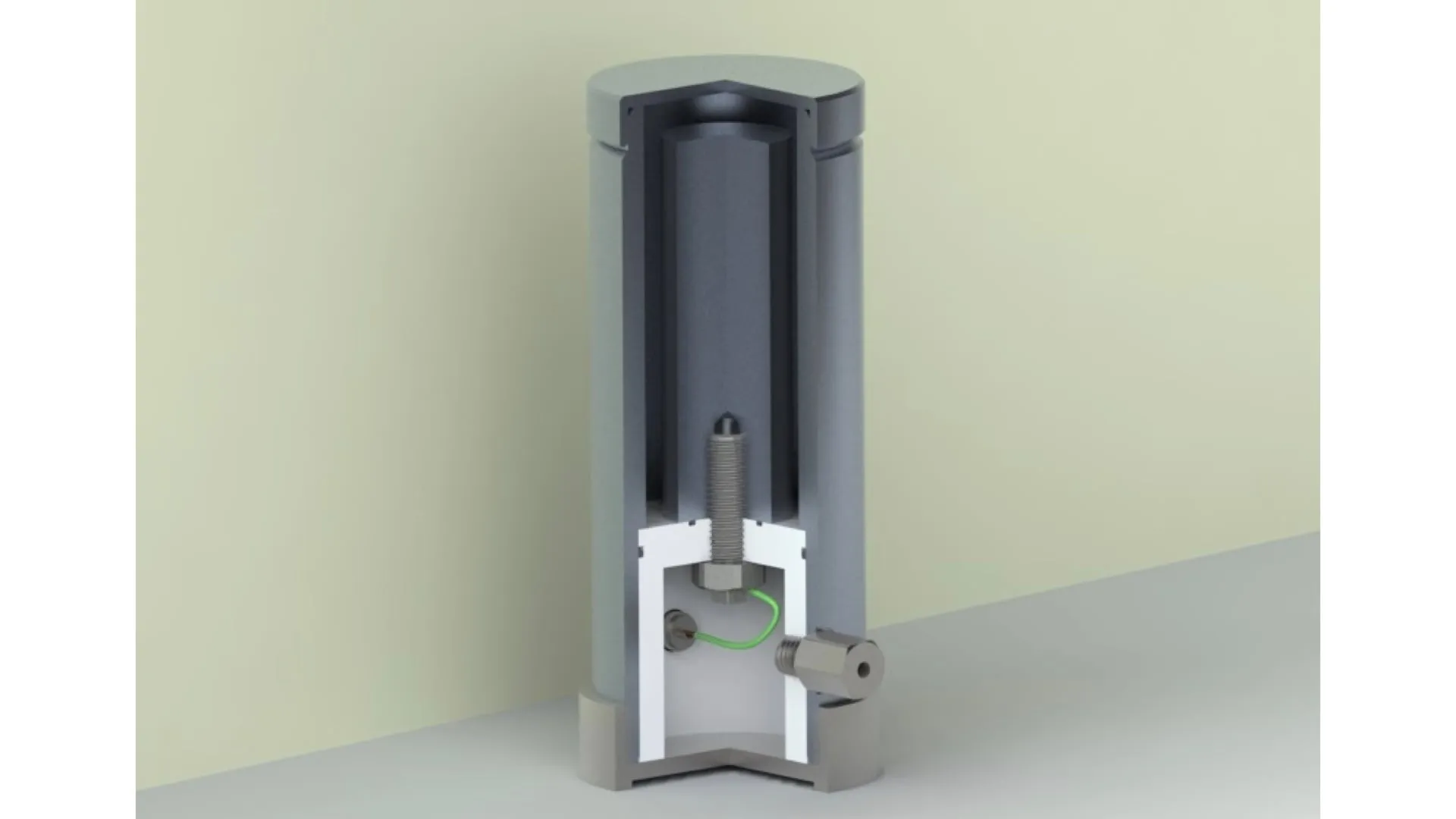
The liquid is placed in a clean conductivity cell with controlled electrode geometry and temperature. Conductivity is measured using an instrument and method appropriate to the expected range and chemical compatibility. Testing follows ASTM D4308 principles for liquid hydrocarbons, or a method selected for the specific liquid type, or an agreed project specific method, and the quotation identifies the governing method before work begins.
What You Receive
- Electrical conductivity at the documented temperature
- Cell, conditioning, and measurement details
- Interpretation for charge relaxation and transfer operations
How the Data Supports Decisions
This result informs whether reduced velocity, relaxation sections, bonding, or conductivity additives are needed, clarifies risk during filtration, splash filling, mixing, and loading, and helps determine whether conductivity is shifting with contamination or formulation changes.
When to Order This Test
- Low conductivity liquids in your process are pumped, filtered, or loaded
- An electrostatic incident or personnel shock has already occurred
- A product change may affect the liquid’s conductivity
Sample Submission Guidance
Provide enough clean liquid to fill and rinse the selected cell. HazBasis confirms quantity, compatibility, volatility controls, and container requirements before shipment. Include the SDS, composition or trade name information, physical form, process description, and whether the sample should be tested as received or prepared to a different condition.
Why Choose HazBasis
- Low conductivity liquids are exactly where static ignition risk during transfer tends to hide, since the charge generated during pumping or filtering has nowhere to go quickly. We interpret the measured value directly against your transfer operation, not as an abstract number on a certificate.
- A shift in conductivity after a formulation or supplier change can quietly turn a previously safe transfer velocity into an unsafe one, so we flag that comparison explicitly when prior data exists to compare against.
- Where the result suggests a relaxation section, bonding upgrade, or conductivity additive is worth considering, we frame that as a practical recommendation your engineering team can act on, not just a number that says the liquid is “low conductivity.”
FAQ
What does Liquid Conductivity testing measure?
Measures a liquid’s ability to conduct charge and supports evaluation of electrostatic accumulation during flow, filtration, mixing, and transfer.
Which standard will be used?
ASTM D4308 principles for liquid hydrocarbons; method selected for liquid type. The final method depends on the sample, project objective, and any customer or regulatory requirements.
Why can filtration increase electrostatic risk?
Fine filtration can generate charge while removing conductive contaminants. A low-conductivity liquid may retain that charge long enough to produce hazardous potentials.