
Electrostatic Hazard Analysis — NFPA 77-Aligned Static Ignition Risk Review
Identify, Evaluate, and Control Static Electricity Hazards Before They Become Ignition Sources
HazBasis Process Safety provides professional Electrostatic Hazard Analysis services for industrial facilities handling flammable liquids, gases, vapors, combustible dusts, powders, solvents, or nonconductive materials.
We help facility owners, EHS teams, process engineers, insurers, and authority-facing reviewers evaluate static charge generation, accumulation, discharge potential, and ignition risk using an NFPA 77-aligned technical basis.
Need an Electrostatic Hazard Analysis? Reach out and we’ll help.
What Is an Electrostatic Hazard Analysis?
Static electricity is easy to overlook because it’s invisible during normal operation. But in the right (or wrong) environment, a static charge can accumulate and discharge with enough energy to ignite a flammable vapor, gas, mist, or combustible dust atmosphere. It doesn’t take a spark you can see. It takes the right combination of material, atmosphere, and charge.
An Electrostatic Hazard Analysis is how HazBasis Process Safety identifies whether static electricity is a credible ignition source in your process, and what safeguards are needed to control it. Our review is aligned with the principles of NFPA 77, Recommended Practice on Static Electricity, covering the identification, assessment, and control of static hazards for fire and explosion prevention.
Electrostatic ignition hazards commonly show up during:
- Use of FIBCs, intermediate bulk containers, filters, membranes, or nonmetallic process components
- Flammable liquid transfer, solvent charging and dispensing, and tank filling or draining
- Powder handling, conveying, bag dumping, and packaging
- Mixing, blending, milling, sieving, and drying
- Pneumatic conveying and dust collection
- Use of plastic containers, liners, hoses, scoops, drums, and other flexible or nonconductive equipment
- Personnel movement in hazardous areas
When You Need an Electrostatic Hazard Analysis
You may need this review if your facility has:
- New equipment installation or a process change involving flammable or combustible materials
- Flammable liquids, solvents, fuels, or combustible liquids handled near or above their flash point
- Combustible powders, dusts, or particulate solids
- Plastic, rubber, glass lined, coated, or other nonconductive equipment
- FIBCs, super sacks, drums, totes, liners, bags, hoses, or flexible connectors
- Pneumatic conveying, vacuum transfer, or powder loading
- Tank truck, IBC, or drum filling, or vessel charging
- Dust collectors, filters, dryers, mixers, blenders, mills, or packaging systems
- Previous static shocks, nuisance discharges, near misses, fires, or explosions
- Insurance, corporate safety, PHA, DHA, or MOC findings that flagged static ignition risk
NFPA 77 Aligned Basis
Our Electrostatic Hazard Analysis follows the principles of NFPA 77, but we’re careful about that word “aligned.” We’re not claiming certified compliance to a standard that doesn’t offer certification. What we mean is that our technical basis, terminology, and evaluation approach follow NFPA 77’s guidance for identifying and controlling static hazards.
Depending on the process, our review may address charge generation mechanisms, charge accumulation on conductive, dissipative, and insulating materials, isolated conductors, bonding and grounding practices, relaxation time and charge dissipation, conductivity and resistivity, static discharge types, personnel grounding, FIBC and flexible packaging hazards, and flammable liquid transfer or powder handling conditions that create ignition potential. The result is a practical, defensible static ignition hazard basis suitable for engineering review, EHS action, insurer evaluation, and authority facing documentation.
Our Project Approach
Step 1: Information Review. We review process descriptions, SDS documents, material data, equipment drawings, operating procedures, transfer methods, ventilation, dust hazard information, and existing bonding and grounding practices.
Step 2: Site Walkdown or Remote Review. For existing facilities, we review equipment arrangement, transfer practices, containers, hoses, tools, FIBCs, grounding points, operator practices, and potential isolated conductors.
Step 3: Static Hazard Evaluation. We evaluate charge generation, charge accumulation, credible discharge types, ignition potential, and whether existing safeguards are adequate.
Step 4: Report and Recommendations. We prepare a clear report with practical, prioritized recommendations and a defensible NFPA 77 aligned basis.
Step 5: Engineering and Review Support. We support follow-up questions from EHS, engineering, insurers, corporate safety teams, or authority facing reviewers.
What We Deliver
Electrostatic Hazard Analysis Report
A technical report covering the applicable NFPA 77 aligned basis, a process and material review, static charge generation mechanisms, potential charge accumulation locations, credible static discharge scenarios, flammable vapor, gas, mist, or dust ignition considerations, existing safeguards, and a bonding and grounding review. It closes with gaps, deficiencies, and prioritized action items, not just a list of observations.
Bonding and Grounding Review
We evaluate whether current bonding and grounding practices actually fit the hazard, including grounding of tanks, vessels, drums, totes, and equipment, bonding across transfer connections, clamps, cables, reels, and continuity verification, isolated metal components, hose selection, portable containers, personnel grounding where applicable, and whether written procedures exist for transfer and handling operations.
Static Ignition Scenario Review
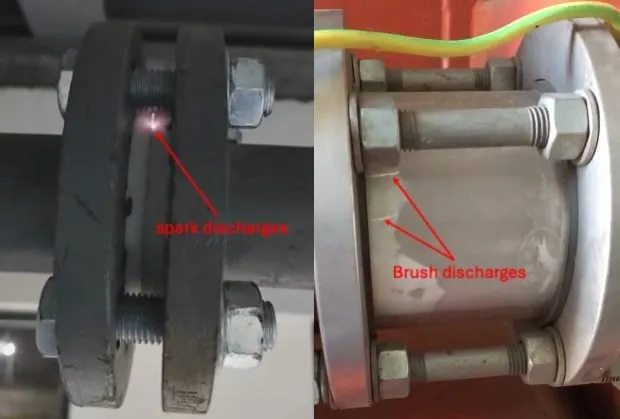
We identify the ignition scenarios that are actually credible for your process, such as spark discharge from isolated conductors, brush or propagating brush discharge from insulating surfaces, cone discharge during powder filling, discharges from personnel, and static accumulation during liquid flow, splash filling, mixing, or powder transfer. The focus stays on scenarios that can be addressed through engineering controls, equipment selection, procedures, and verification, not theoretical edge cases.
Practical Recommendations
Recommendations are written so engineering, maintenance, operations, and EHS teams can actually act on them. Depending on the findings, that might mean bonding and grounding improvements, conductive or dissipative equipment selection, transfer rate controls, fill pipe and splash filling controls, FIBC selection requirements, updated inspection and testing frequencies, or specific training topics for operators and maintenance staff.
Why It Matters
Static hazards get missed for a simple reason: the equipment looks mechanically simple and the operation looks routine. But whether static ignition risk actually exists depends on a combination of material properties, atmosphere, charge generation, charge accumulation, equipment configuration, and discharge potential, not any one factor alone.
A proper Electrostatic Hazard Analysis is built to answer:
- Can static electricity be generated in this operation?
- Can charge accumulate on equipment, containers, materials, or personnel?
- Is a flammable vapor, gas, mist, or dust atmosphere present?
- Could a discharge carry enough energy to ignite that atmosphere?
- Are bonding and grounding controls adequate?
- Are insulating materials introducing an additional hazard?
- Are current procedures and verification practices sufficient?
- What safeguards are needed before startup, modification, or continued operation?
Typical Processes We Review
HazBasis supports Electrostatic Hazard Analysis for flammable liquid transfer and storage, solvent dispensing and charging, chemical manufacturing, pharmaceutical processing, battery and electrolyte handling, paint, coating, resin, and adhesive operations, powder blending, milling, drying, and packaging, food ingredient and starch handling, plastic and polymer powder processing, additive manufacturing powder handling, dust collection systems, pilot plants and laboratories, and tank truck, drum, tote, and IBC filling operations.
Why Choose HazBasis
HazBasis combines process safety, combustible dust, flammable liquid, hazardous area classification, and electrostatic ignition hazard experience in one team, so the static review actually connects to the rest of your facility’s hazard picture instead of existing in isolation.
Our Electrostatic Hazard Analysis work is:
- NFPA 77 aligned and technically defensible
- Practical for day to day industrial operations
- Clear enough for insurer and authority facing documentation
- Focused on real ignition scenarios, not generic checklists
We don’t hand over a static electricity checklist without understanding the process behind it. We evaluate the actual materials, equipment, operations, atmosphere, and safeguards that determine whether static electricity is a credible ignition source in your facility specifically.
FAQ
What is Electrostatic Hazard Analysis?
Electrostatic Hazard Analysis is a technical review of how static electricity may be generated, accumulated, and discharged during an industrial operation. The analysis evaluates whether a static discharge could ignite flammable vapor, gas, mist, or combustible dust atmospheres.
Is NFPA 77 a code or a recommended practice?
NFPA 77 is a recommended practice for static electricity hazards. It provides guidance for identifying, evaluating, and controlling static electricity hazards to help prevent fires and explosions.
What types of facilities need an Electrostatic Hazard Analysis?
Facilities handling flammable liquids, solvents, combustible dusts, powders, nonconductive materials, plastic containers, FIBCs, hoses, liners, or transfer operations may need an Electrostatic Hazard Analysis.
Does bonding and grounding eliminate all static hazards?
No. Bonding and grounding are important controls, but they do not eliminate every static hazard. Insulating materials, nonconductive liquids, powder charging, plastic liners, isolated conductors, and certain flexible containers may still create static ignition concerns.
Can HazBasis review FIBC or super sack operations?
Yes. HazBasis can review FIBC use, powder charging, bag unloading, grounding practices, dust cloud formation, and potential electrostatic ignition scenarios.
Can this analysis be combined with a Dust Hazard Analysis?
Yes. Electrostatic ignition review is often useful during a Dust Hazard Analysis, especially for powder transfer, dust collection, pneumatic conveying, packaging, and FIBC operations.
Can this analysis be performed remotely?
Some projects can be reviewed remotely if sufficient drawings, photos, SDS documents, operating procedures, and equipment information are available. For complex or high-hazard operations, an on-site walkdown is often recommended.
Can HazBasis support insurer or authority-facing comments?
Yes. HazBasis can review comments, prepare technical responses, revise documentation, and support engineering discussions with insurers, reviewers, or authority-facing stakeholders.