

What This Test Answers
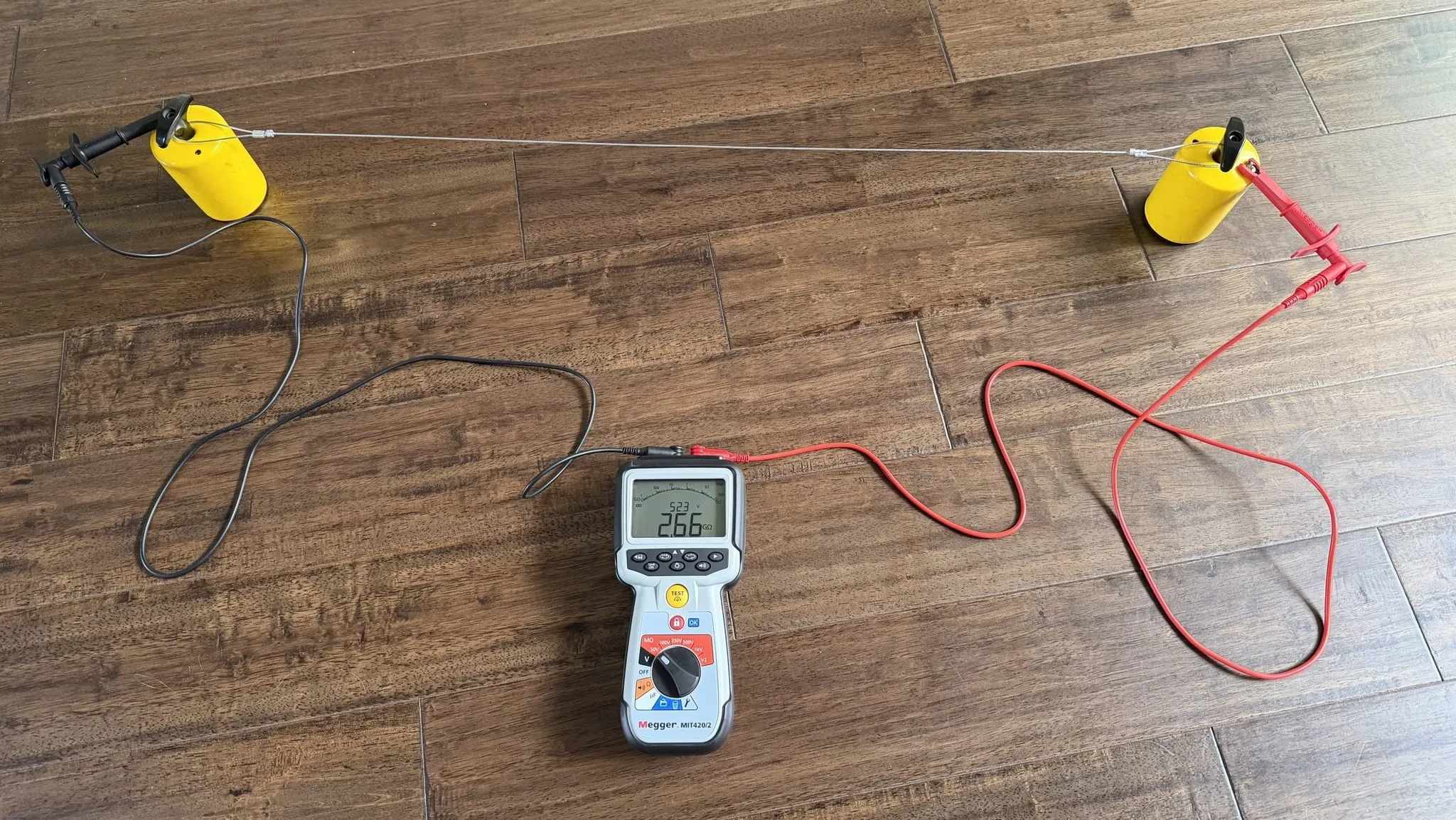
Floor resistance testing determines whether an installed flooring system provides the electrical characteristics needed to support electrostatic hazard control. The testing evaluates resistance across the floor surface and between the flooring and its designated grounding connection, helping identify whether the installed system is likely to perform as intended.
The results apply to the flooring installation, test locations, environmental conditions, and measurement methods documented in the report. Because floor resistance can be influenced by humidity, contamination, cleaning products, wear, grounding quality, and installation practices, the measurements should be interpreted as part of the complete electrostatic-control system rather than as isolated values.
Not sure whether floor resistance testing is appropriate for your facility?
Test Method and Standard
Testing is performed using procedures based on ASTM F150-25 and follows recognized practices for evaluating conductive and static-dissipative resilient flooring. Depending on the project scope, measurements may include:
- Surface-to-surface (point-to-point) resistance
- Surface-to-ground (point-to-ground) resistance
- Environmental conditions affecting measurements
- Grounding continuity observations
- Visual observations affecting flooring performance
Where project specifications, manufacturer requirements, or facility ESD programs define additional acceptance criteria, these can be incorporated into the testing scope before work begins.
What You Receive
Our floor resistance testing program provides:
- Surface-to-surface and surface-to-ground resistance measurements
- Documentation of test conditions and environmental parameters
- Comparison with applicable project specifications or acceptance criteria
- Identification of abnormal or inconsistent readings
- Practical recommendations where additional evaluation or corrective action may be warranted
The report provides a clear record of the testing performed and can support construction closeout, commissioning, quality assurance, periodic verification, or electrostatic hazard management programs.
How the Data Supports Decisions
Floor resistance measurements help determine whether an installed flooring system is likely to provide the intended electrostatic-control performance. The results can support acceptance of new installations, verification of existing ESD flooring programs, troubleshooting of electrostatic problems, and evaluation of grounding continuity throughout the facility.
The data can also guide maintenance practices, identify areas requiring repair or further investigation, and provide documented evidence for facility owners, contractors, insurers, or quality systems. Because floor resistance is only one element of electrostatic hazard control, the results should be considered alongside footwear, personnel grounding, equipment grounding, environmental conditions, and the sensitivity of the process or materials involved.
When to Order This Test
Floor resistance testing is commonly performed when:
- A new conductive or static-dissipative floor has been installed and requires acceptance testing
- Periodic verification is needed as part of an electrostatic-control program
- Static shocks, equipment failures, or suspected grounding problems have been reported
- Flooring has been repaired, refinished, cleaned, or exposed to chemicals or water
- A customer, insurer, or regulatory body requires documented verification of flooring performance
- An electrostatic hazard assessment identifies the flooring system as a critical control measure
What Floor Resistance Testing Measures
Surface-to-Surface Resistance
Surface-to-surface resistance measures the electrical resistance between two locations on the flooring surface. These measurements help evaluate the consistency of the flooring installation and identify areas where resistance differs significantly from the surrounding floor.
The testing can identify localized installation issues, changes caused by wear or contamination, inconsistent conductive pathways between flooring sections, or the effects of maintenance products and floor finishes.
Surface-to-Ground Resistance
Surface-to-ground resistance measures the electrical resistance between the flooring surface and the designated grounding connection. This measurement evaluates whether electrostatic charge can be transferred from the floor into the facility grounding system through the installed grounding arrangement.
Testing may identify disconnected grounding strips, damaged grounding conductors, poor continuity, or other installation issues that cannot be identified through surface measurements alone.
Why Both Measurements Matter
Neither measurement should be evaluated in isolation. A floor may exhibit acceptable resistance across its surface while having an ineffective connection to ground. Likewise, a properly grounded floor may contain localized areas with abnormal resistance caused by damage, contamination, installation defects, or deterioration.
Reviewing both sets of measurements provides a more complete understanding of how the installed flooring system is likely to perform under actual operating conditions.
Sample Submission Guidance
Because this is a field testing service, no laboratory sample is normally required. Before testing, provide available information regarding the flooring system, including manufacturer details, installation drawings, grounding arrangements, project specifications, previous test results, and any known performance concerns.
If the testing supports an investigation, commissioning project, or electrostatic hazard assessment, additional information such as facility layouts, equipment locations, operating conditions, cleaning procedures, or maintenance history may help define the testing scope and improve interpretation of the results.
What Is Included in the Test Report?
Each report provides clear documentation of the testing performed and the basis for the conclusions. Depending on the project scope, the report may include:
- Facility and test-area identification
- Flooring type and manufacturer, where available
- Test methods and instrumentation
- Surface-to-surface and surface-to-ground resistance measurements
- Environmental conditions during testing
- Test location plans or marked photographs, where included in scope
- Comparison with project or manufacturer acceptance criteria
- Identification of abnormal or inconsistent readings
- Observations affecting flooring performance
- Practical recommendations and suggested next steps
Common Applications
Floor resistance testing supports a wide range of activities throughout the life of a facility, including:
- Insurance or third-party technical reviews
- Installation acceptance and construction closeout
- Cleanroom and laboratory commissioning
- Periodic ESD flooring verification
- Electrostatic incident investigations
- Preventive maintenance programs
- Troubleshooting static-control problems
- Verification following repairs or renovations
- Contractor quality assurance
Why Choose HazBasis
Floor resistance measurements only have value when they’re interpreted in the context of how the floor is actually used. A resistance value by itself doesn’t determine whether personnel, equipment, or the overall electrostatic-control system is adequately protected. We evaluate the flooring installation as part of the complete grounding path, considering installation quality, grounding continuity, environmental conditions, maintenance practices, and the intended application rather than simply reporting instrument readings.
Because HazBasis specializes in electrostatic hazards and process safety, we understand how flooring performance interacts with footwear, personnel grounding, equipment, and ignition-sensitive operations. Our reports explain what the measurements mean, identify likely causes of abnormal results, and provide practical recommendations where additional investigation or corrective action is warranted. If the testing identifies a broader electrostatic issue, we can also support a full Electrostatic Hazard Assessment without repeating the investigative work.
FAQ
What is floor resistance testing?
It measures how readily electrical charge can move across a flooring surface and from the flooring surface to ground. It is used to evaluate conductive and static-dissipative flooring installed for electrostatic control.
What is the difference between point-to-point and point-to-ground testing?
Point-to-point testing measures resistance between two locations on the floor. Point-to-ground testing measures resistance between the flooring surface and the grounding connection.
Does ASTM F150 apply to installed floors?
Yes. ASTM F150 includes procedures for both qualification specimens and flooring tested after installation.
How many measurements are required?
ASTM F150 specifies at least five tests per flooring material or five tests per 5,000 ft², whichever is greater. Additional measurements may be appropriate for large, irregular, damaged, or high-risk areas.
Can humidity affect the results?
Yes. Flooring resistance may increase under low-relative-humidity conditions. Temperature and humidity should be documented and considered during interpretation.
Does passing a floor resistance test prove that personnel are properly grounded?
No. Personnel grounding also depends on footwear, contact resistance, contamination, humidity, and the interaction between the person, footwear, and flooring.
Can an insulating floor coating affect the results?
Yes. Wax, sealers, finishes, contamination, and incompatible cleaning products may increase surface resistance and interfere with charge dissipation.
Can HazBasis test an existing floor that has been in service for several years?
Yes. Existing floors can be evaluated for aging, wear, contamination, maintenance effects, damage, and continued electrical performance.