What Lower and Upper Flammability Limits (LFL/UFL) Testing Answer
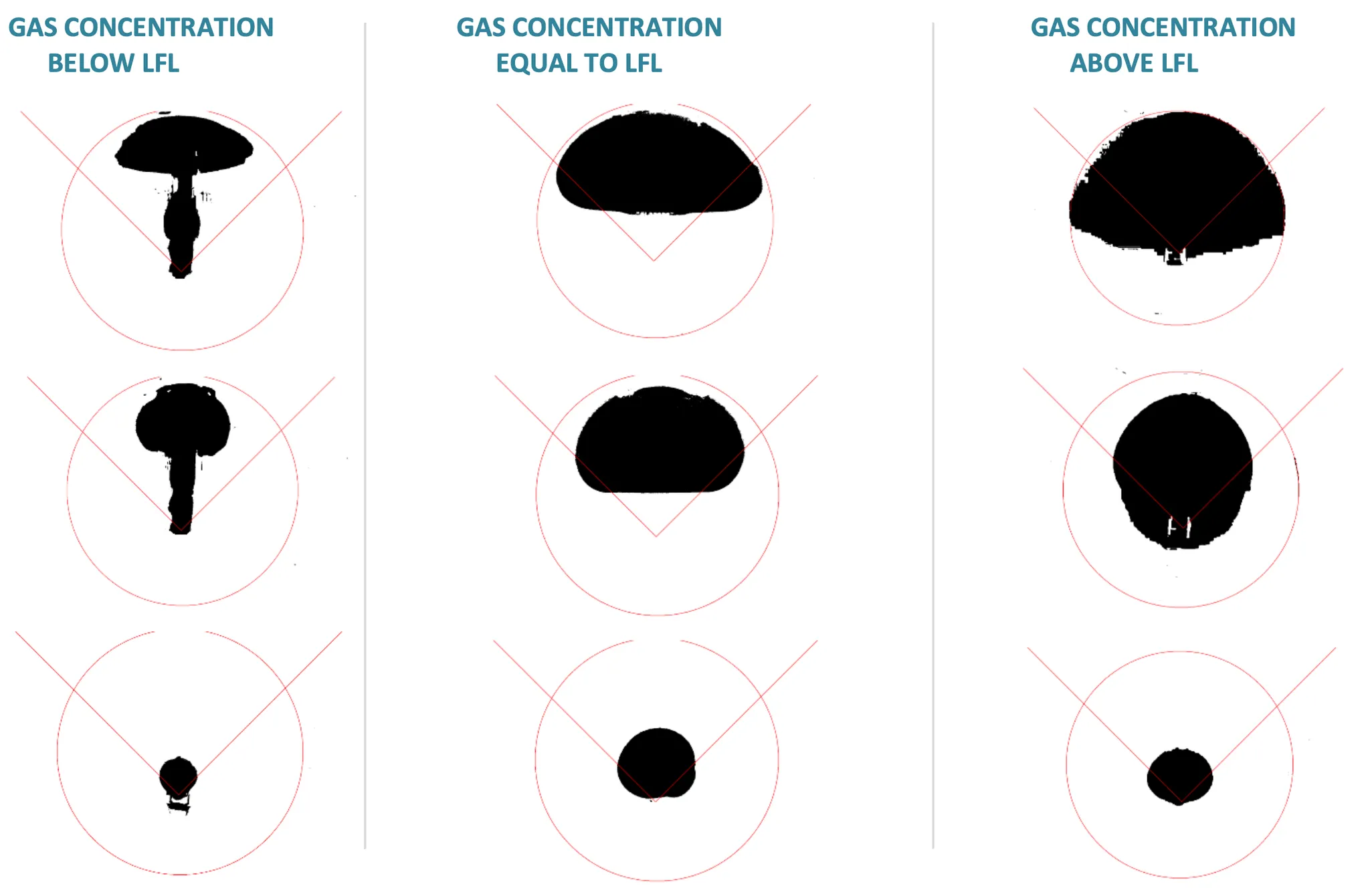
This test determines the minimum and maximum fuel concentrations that propagate flame in air, under the specified temperature, pressure, humidity, and ignition conditions. The result applies to the submitted sample, preparation, conditioning, and test conditions stated in the report. As with any single lab value, we’re careful not to generalize it as a universal property of the material, since particle size, moisture, temperature, pressure, geometry, and formulation can all shift the outcome.
Not sure if reference LFL/UFL data covers your operating conditions? Reach out and we’ll help you scope it.
Test Method and Standard
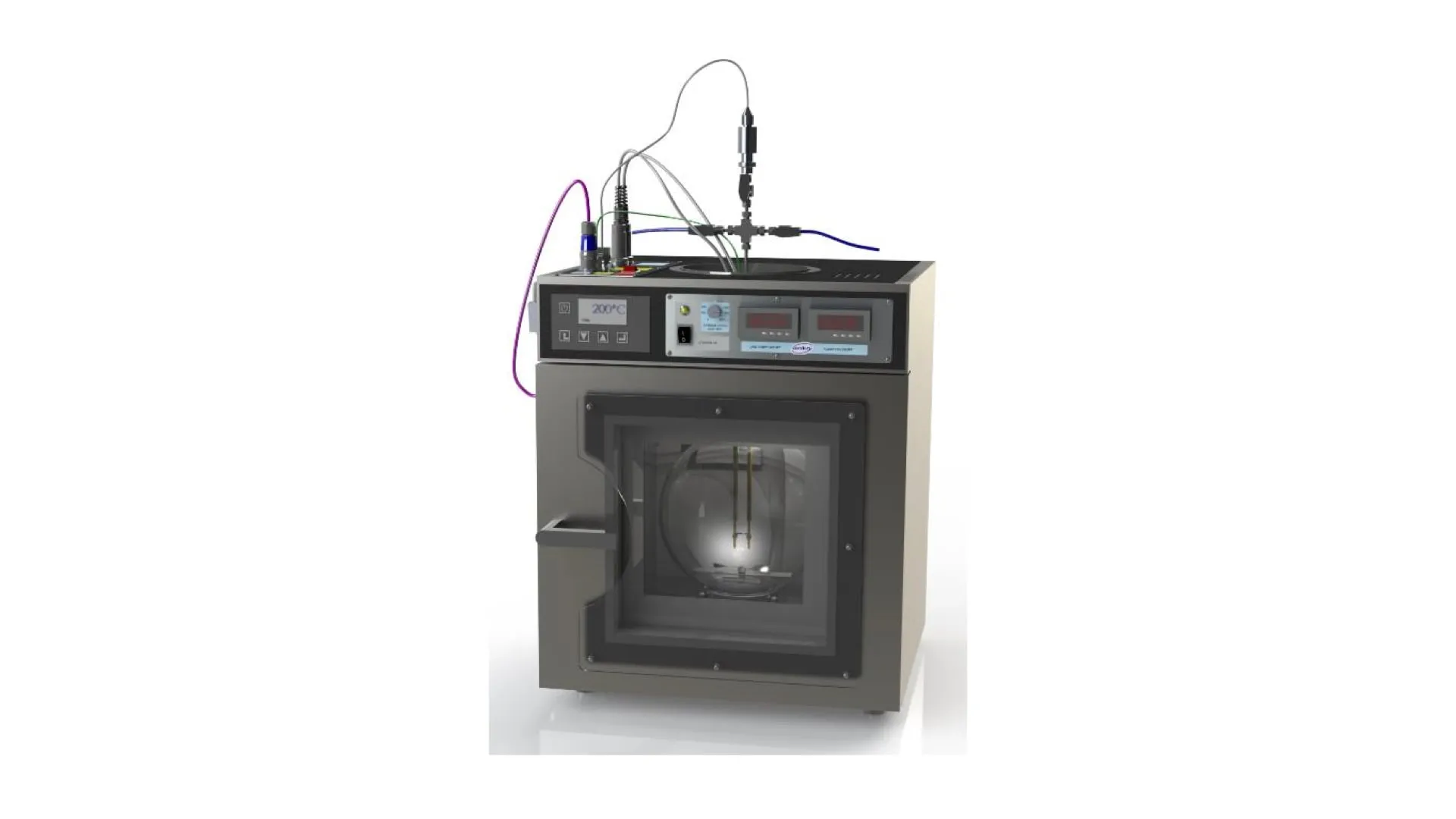
Known fuel-air mixtures are prepared in a standardized vessel and exposed to a defined ignition source. Concentration is stepped around the lower and upper transition regions, with flame propagation assessed against the applicable criterion. Testing follows ASTM E681, or ASHRAE 34 conditions for refrigerants where applicable, or an agreed project specific method, and the quotation identifies the governing method before work begins.
What You Receive
- LFL and UFL in volume percent or specified units
- Test temperature, pressure, humidity, ignition, and propagation criterion
- Concentration response observations and interpretation
How the Data Supports Decisions
This result supports ventilation, gas detection, purge, and inerting strategy, informs hazardous area classification and release evaluation, and fills SDS, refrigerant, and process safety data needs.
When to Order This Test
- Measured limits aren’t available for a mixture or new formulation
- Your operating temperature or pressure differs from reference conditions
- A ventilation or detector design requires a defensible flammability range, not a literature estimate
Sample Submission Guidance
Gas quantity or liquid sample volume depends on vapor pressure, expected limits, number of mixtures, and conditioning. HazBasis confirms cylinder, container, and purity requirements before shipment. Include the SDS, composition or trade name information, physical form, process description, and whether the sample should be tested as received or prepared to a different condition.
Why Choose HazBasis
- LFL and UFL values are usually reported at standard temperature and pressure, but the flammable range genuinely widens as temperature or pressure increases, so a literature value can understate the real hazard at your actual operating conditions. We test at your conditions when that gap matters, not just at the reference point.
- Mixtures don’t average their components’ individual limits in any simple way, so a new formulation or blend needs its own measured range rather than an estimate built from the pure components.
- Once the range is established, we help translate it into the design number that actually matters, a detector setpoint, a purge target, a ventilation rate, rather than leaving that engineering step for you to work out separately.
FAQ
What does LFL / UFL testing measure?
Determines the minimum and maximum fuel concentrations that propagate flame in air under the specified temperature, pressure, humidity, and ignition conditions.
Which standard will be used?
ASTM E681; ASHRAE 34 conditions for refrigerants where applicable. The final method depends on the sample, project objective, and any customer or regulatory requirements.
Do LFL and UFL remain constant at all temperatures and pressures?
No. Flammability limits can widen with increasing temperature, pressure, oxygen enrichment, or different diluents. The report applies to the specified test conditions.