What This Test Answers
This test determines the lowest furnace temperature at which a dispersed dust cloud ignites under the standardized test conditions. The result applies to the submitted sample, preparation, conditioning, and test conditions stated in the report. As with any single lab value, we’re careful not to generalize it as a universal property of the material, since particle size, moisture, temperature, pressure, geometry, and formulation can all shift the outcome.
Not sure if you need MAIT, LIT, or both? Reach out and we’ll help you scope it.
Test Method and Standard
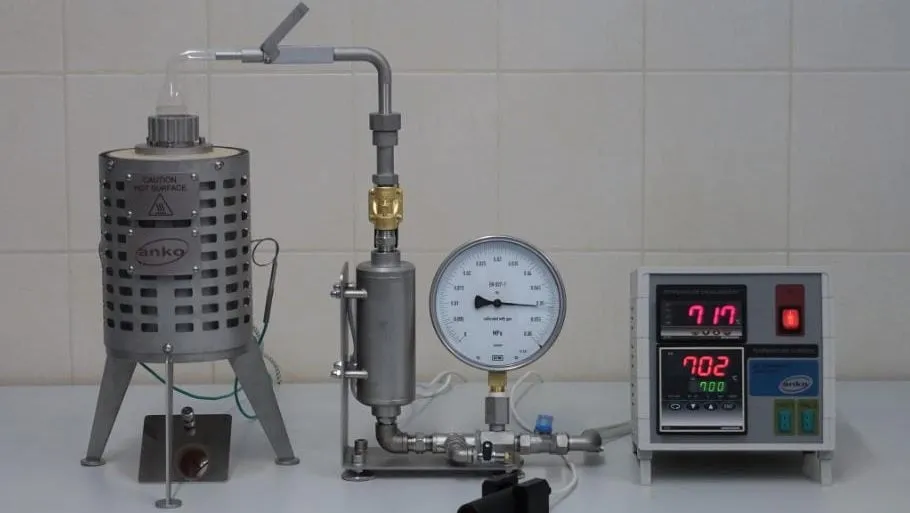
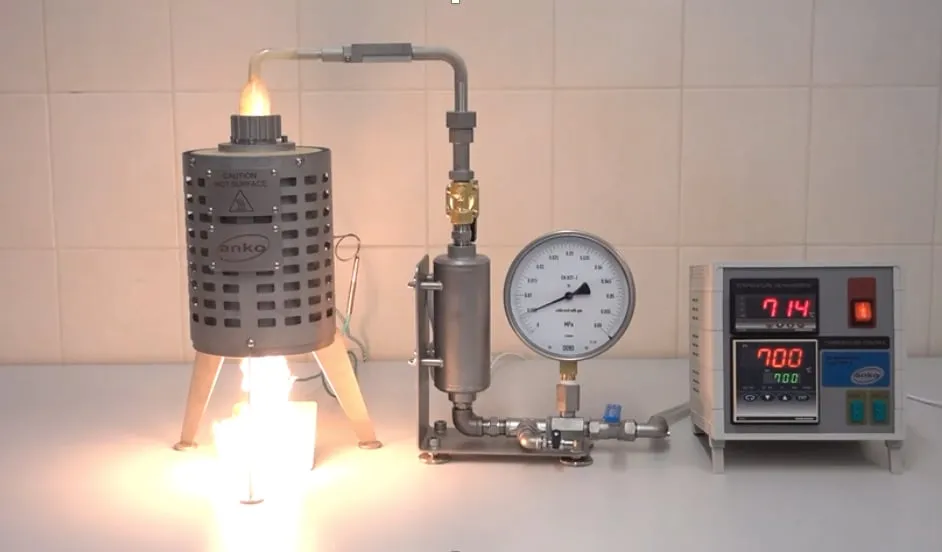
Small quantities of dust are dispersed through a heated furnace. Furnace temperature, sample mass, and dispersion pressure are varied until ignition and repeated non-ignition conditions bracket the minimum autoignition temperature. Testing follows ASTM E1491 or an agreed project specific method, and the quotation identifies the governing method before work begins.
What You Receive
- Dust cloud MAIT
- Ignition and non-ignition observations and test variables
- Input for hot surface and equipment temperature assessments
How the Data Supports Decisions
This result supports equipment temperature class and hot surface screening, informs control of heaters, dryers, bearings, motors, and other process surfaces, and helps evaluate grinding sparks and high temperature environments.
When to Order This Test
- Dust clouds can contact hot equipment or heated air in your process
- Electrical or non-electrical equipment needs to be selected for a dust hazard area
- Operating temperature or product properties are changing
Sample Submission Guidance
Approximately 50 to 100 g is commonly requested, with the final quantity depending on bulk density, preparation, and repeat testing. Include the SDS, composition or trade name information, physical form, process description, and whether the sample should be tested as received or prepared to a different condition.
Why Choose HazBasis
- A suspended dust cloud and an insulating dust layer ignite under genuinely different conditions, so a cloud MAIT result doesn’t substitute for layer ignition temperature (LIT) data, and we’re upfront about which one your equipment temperature decision actually calls for. Many facilities need both, and we’ll say so rather than letting one test stand in for the other.
- Because this result often sets a hard temperature ceiling for nearby equipment, we document the ignition and non-ignition bracket precisely enough to support that engineering limit with confidence, not just a single reported number.
- If dryers, heaters, or bearing surfaces are already a known concern in your facility, we can help scope MAIT and LIT together from the start instead of running them as separate, disconnected requests.
FAQ
What does Dust Cloud MAIT testing measure?
Determines the lowest furnace temperature at which a dispersed dust cloud ignites under the standardized test conditions.
Which standard will be used?
ASTM E1491. The final method depends on the sample, project objective, and any customer or regulatory requirements.
Is cloud MAIT the same as dust-layer ignition temperature?
No. A suspended dust cloud and an insulating dust layer behave differently. Many facilities need both MAIT and LIT data for equipment-temperature decisions.