

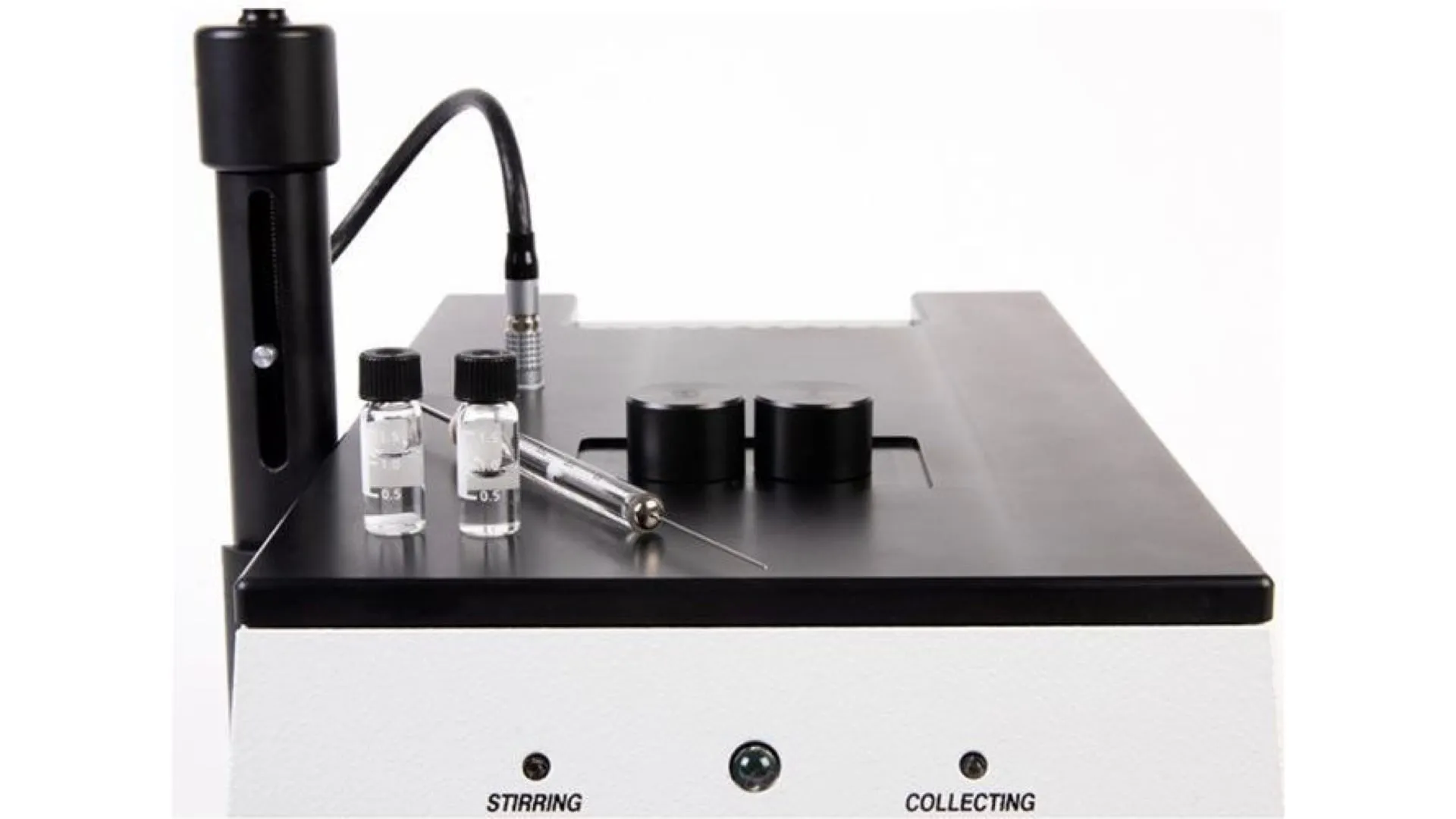
What Micro Reaction Calorimeter Testing Answers
This test measures the heat generated or absorbed during a chemical reaction under controlled process conditions. Micro Reaction Calorimetry helps determine how much heat a reaction produces, how quickly that heat is released, and how process variables such as dosing, concentration, temperature, and mixing affect thermal behavior.
The result applies to the submitted chemistry, preparation, conditioning, and test conditions documented in the report. The data supports process development and scale-up decisions by connecting reaction behavior with cooling requirements, control strategies, and operating conditions.
Not sure if Micro Reaction Calorimetry is the right test for your scale-up question? Reach out and we’ll help you scope the testing.
Test Method and Standard
The reaction is performed at laboratory scale using a micro reaction calorimeter designed to measure heat-flow or thermal-power changes during controlled batch or semi-batch operation.
HazBasis evaluates the reaction conditions, including chemistry, concentration, temperature, dosing sequence, catalyst, solvent, agitation, and process objectives, to develop a representative test approach. The resulting thermal profile is analyzed to determine heat release, reaction progression, and the impact of process variables.
What You Receive
- Documented reaction conditions and test parameters
- Heat-flow and thermal-power data
- Total heat release and heat-generation-rate results where applicable
- Evaluation of dosing, concentration, temperature, or process-condition effects
- Process safety interpretation and scale-up recommendations
How the Data Supports Decisions
Micro Reaction Calorimetry provides the data needed to evaluate reactor cooling requirements, feed strategies, and thermal control during process development.
The results help engineers understand whether heat generation can exceed heat removal capacity, whether reactants may accumulate during dosing, and how changes in temperature, concentration, mixing, or operating mode may affect process safety.
The data supports scale-up evaluations, PHA/HAZOP reviews, process optimization, and selection of additional testing such as ARC or VSP when runaway or relief scenarios require further evaluation.
When to Order This Test
- An exothermic reaction is being developed or scaled from laboratory to pilot or commercial production
- Reactor cooling requirements or heat-removal capacity need to be evaluated
- Feed rate, dosing strategy, catalyst level, or order of addition may affect process safety
- A batch or semi-batch process requires better understanding of heat release behavior
- Process changes, alternate raw materials, or formulation changes may impact reaction performance
Sample Submission Guidance
Sample requirements depend on the reaction chemistry, operating conditions, and testing objectives. HazBasis confirms the required materials, quantities, preparation requirements, and process information before testing begins.
Include the SDS, reaction scheme, composition information, process description, operating temperature and pressure, addition sequence, equipment scale, and the specific scale-up or safety question the testing needs to address.
Why Choose HazBasis
Reaction calorimetry is most valuable when it answers a specific process safety or engineering question. HazBasis combines laboratory measurement with process safety expertise to help translate reaction heat data into practical decisions for reactor design, scale-up, and process control.
We focus on understanding how the chemistry behaves under the intended operating conditions, not just measuring heat release. So the results can support safer dosing strategies, cooling design, operating limits, and future hazard evaluations.
FAQ
When is Micro Reaction Calorimeter testing most valuable?
It is especially useful during process development and scale-up when the engineering team needs heat of reaction, heat-generation rate, dosing-response, accumulation, or preliminary cooling-duty information.
Can the test evaluate different feed rates?
Yes, when supported by the instrument and scope. Comparing feed profiles can show how addition rate affects heat release, peak power, reaction response, and accumulation.
Can reaction calorimetry prove that a process is safe?
No single test proves safety. The data supports design, but credible deviations, decomposition, side reactions, control reliability, mixing, heat transfer, emergency relief, and scale-up must also be evaluated.
What is the difference between Micro RC and ARC?
Micro RC primarily quantifies heat from an intended controlled reaction. ARC follows self-heating under near-adiabatic conditions and is generally used for runaway, decomposition, and thermal-stability evaluation.
Can Micro RC data be used directly for commercial reactor cooling design?
It provides important inputs, but scale-up requires correction for process mass, heat capacity, heat transfer, mixing, reaction kinetics, feed control, utility conditions, and uncertainty.