

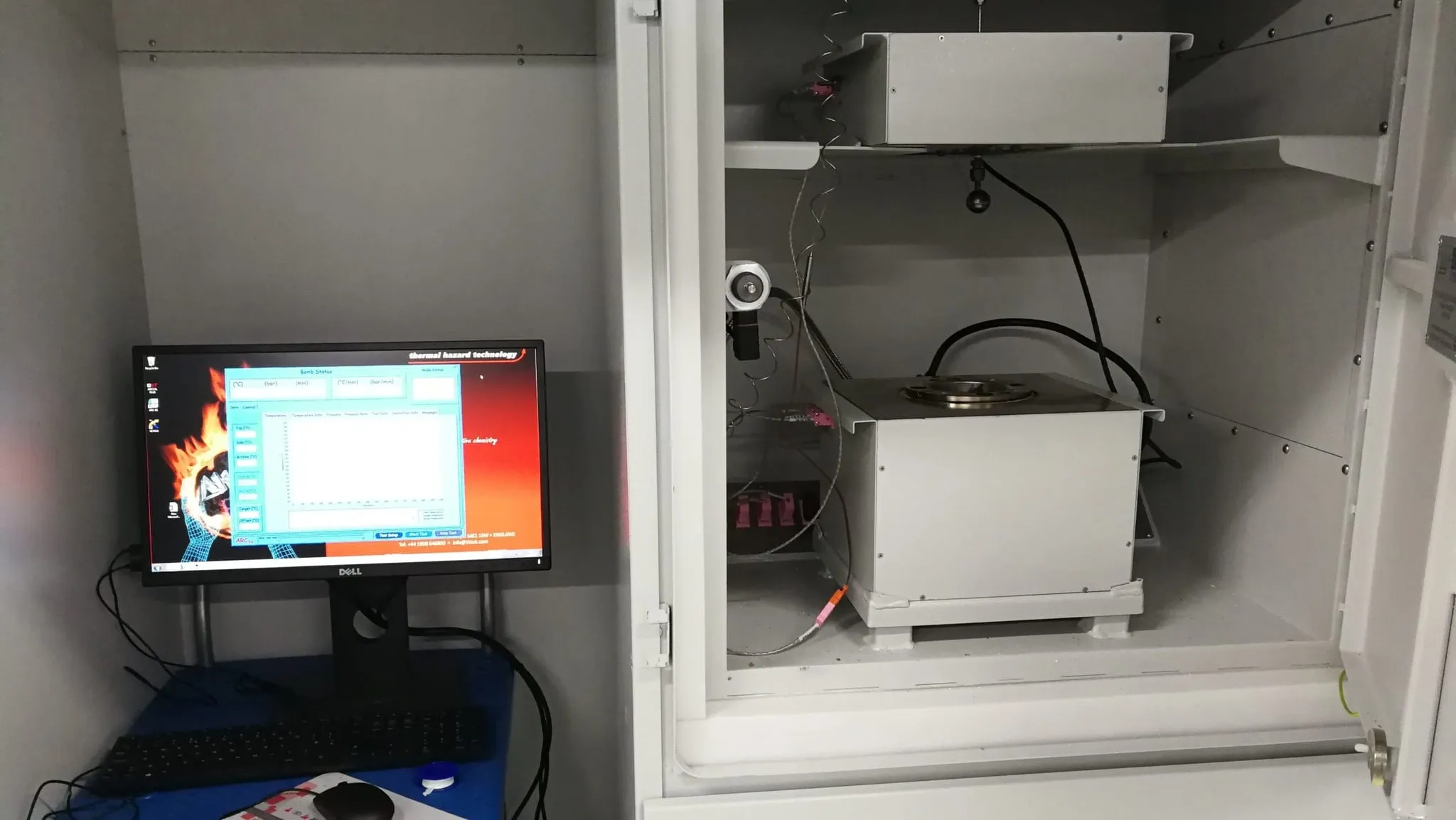
What Accelerating Rate Calorimeter (ARC) Testing Answers
This test evaluates how a material behaves when an exothermic reaction begins and heat removal is limited. ARC testing identifies self-heating behavior, temperature acceleration, pressure development, and the progression of a potential runaway event under near-adiabatic conditions.
The result applies to the submitted sample, preparation, conditioning, and test conditions documented in the report. ARC data helps answer key safety questions, including when self-heating begins, how rapidly the reaction accelerates, and how much time may be available for intervention.
Not sure if ARC testing is the right approach for your material? Reach out and we’ll help you scope the testing.
Test Method and Standard
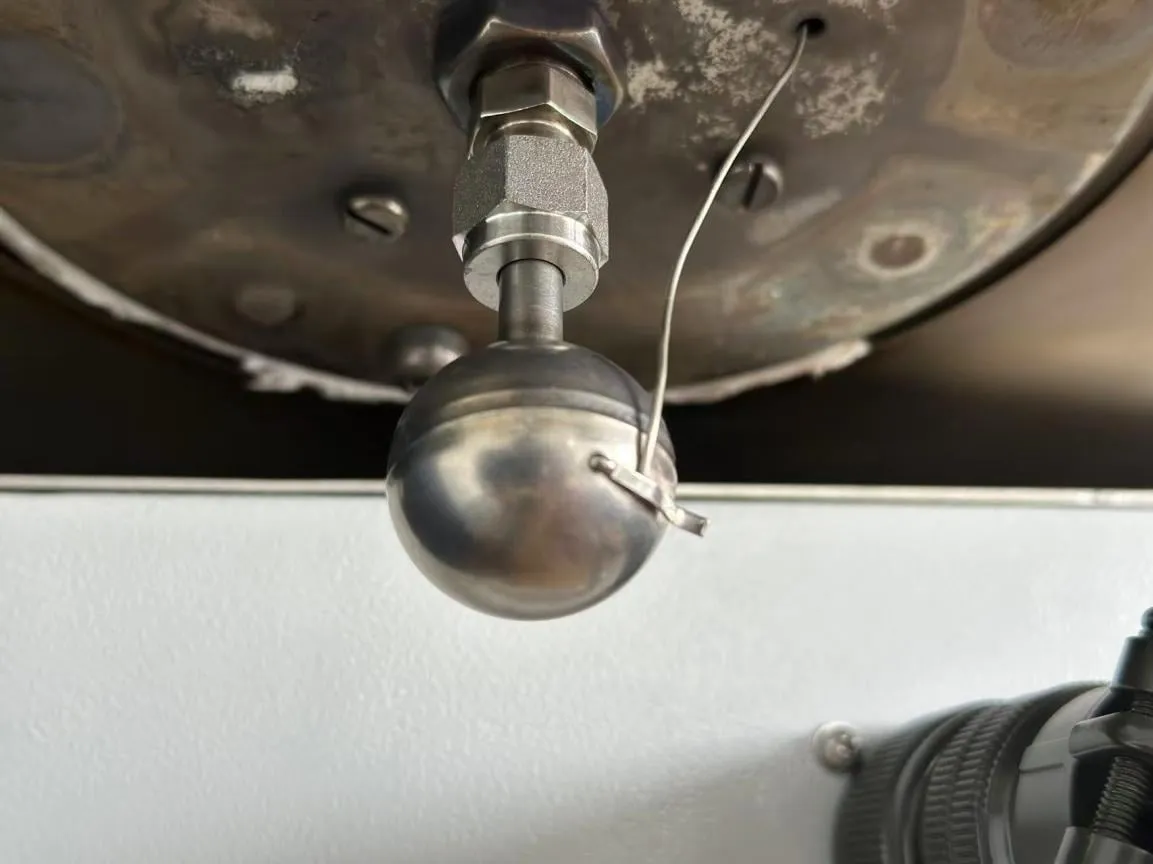
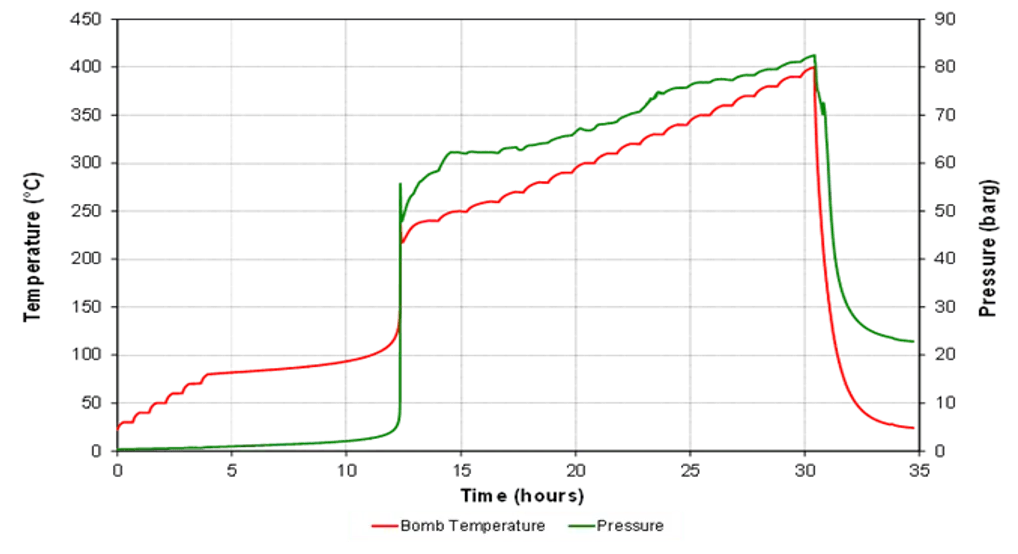
An Accelerating Rate Calorimeter uses a heat-wait-search approach to identify self-heating behavior. The sample is heated in controlled steps, allowed to equilibrate, and monitored for temperature increases above a defined detection threshold.
Once self-heating is detected, the test follows the reaction under near-adiabatic conditions while monitoring temperature and pressure behavior over time. Test conditions, sample configuration, detection sensitivity, and measurement limits are selected based on the material, process scenario, and project objective.
What You Receive
- Documented ARC test conditions and sample information
- Temperature, pressure, and self-heating behavior data
- Self-heat onset, reaction acceleration, and pressure-generation results where applicable
- Time-dependent thermal behavior and key event observations
- Process safety interpretation and recommendations for next steps
How the Data Supports Decisions
ARC data supports evaluation of safe storage and handling temperatures, alarm and interlock strategies, and runaway reaction scenarios.
The results help engineers assess thermal accumulation, cooling-loss scenarios, scale-up risks, and the need for additional safeguards such as emergency cooling, quenching, inhibition, or pressure-relief evaluation.
ARC results also provide measured data for PHA, HAZOP, MOC, incident investigations, and selection of additional testing such as VSP or reaction calorimetry.
When to Order This Test
- A material, intermediate, or formulation may undergo self-heating or thermal decomposition
- DSC screening identifies a significant exothermic event requiring further evaluation
- Storage, transportation, drying, concentration, or waste handling involves elevated temperature exposure
- A process may experience loss of cooling, agitation failure, contamination, or other upset conditions
- Scale-up or safety reviews require data on runaway severity and response time
Sample Submission Guidance
Sample requirements depend on material type, expected reactivity, pressure behavior, and the selected ARC configuration. HazBasis confirms the required quantity, preparation requirements, and testing approach before work begins.
Include the SDS, composition or trade-name information, physical form, process description, operating conditions, expected hazard scenario, and the specific safety question the testing needs to answer.
Why Choose HazBasis
ARC testing provides valuable insight into runaway behavior, but the results must be interpreted in the context of the test configuration, sample characteristics, and real process conditions. HazBasis combines calorimetry expertise with process safety experience to help translate laboratory data into practical engineering decisions.
We focus on understanding the actual safety question—whether it involves storage stability, scale-up, operating limits, cooling requirements, or emergency protection—so the testing strategy provides meaningful data rather than simply generating measurements.
FAQ
Why use ARC testing after DSC?
DSC efficiently identifies thermal events, while ARC provides more detailed near-adiabatic self-heating, time, temperature, and pressure behavior needed for runaway and stability decisions.
What is TMRad?
TMRad is the estimated time to maximum reaction rate under adiabatic conditions from a selected starting temperature. It is model-dependent and should be reported with assumptions and data limitations.
Can ARC data define a maximum safe storage temperature?
It can support that decision, but the final limit should also consider storage duration, package size, heat transfer, contamination, quality variability, kinetic uncertainty, monitoring, and response capability.
Does ARC testing size a pressure-relief device?
ARC data can support scenario development, but emergency relief sizing often requires low-thermal-inertia data and evaluation of vapor, gassy, hybrid, or two-phase flow behavior. VSP testing may be needed.
Can ARC test intended reactions as well as decomposition?
Yes, subject to sample handling and test configuration. The protocol should represent the chemistry and failure scenario being evaluated.