Identify Process Hazards Before They Become Incidents
A Process Hazard Analysis is a structured, team based evaluation of what can go wrong in a hazardous process: why it could happen, what consequences may result, which safeguards are relied upon, and whether additional risk reduction is needed. The analysis should be appropriate to the complexity and hazards of the process, not a generic checklist completed for documentation purposes.
A strong PHA should give management a defensible basis for decisions: which scenarios matter, which safeguards are credible, where risk remains inadequately controlled, and which recommendations deserve priority.
PHA Methods Available From HazBasis
HAZOP Study
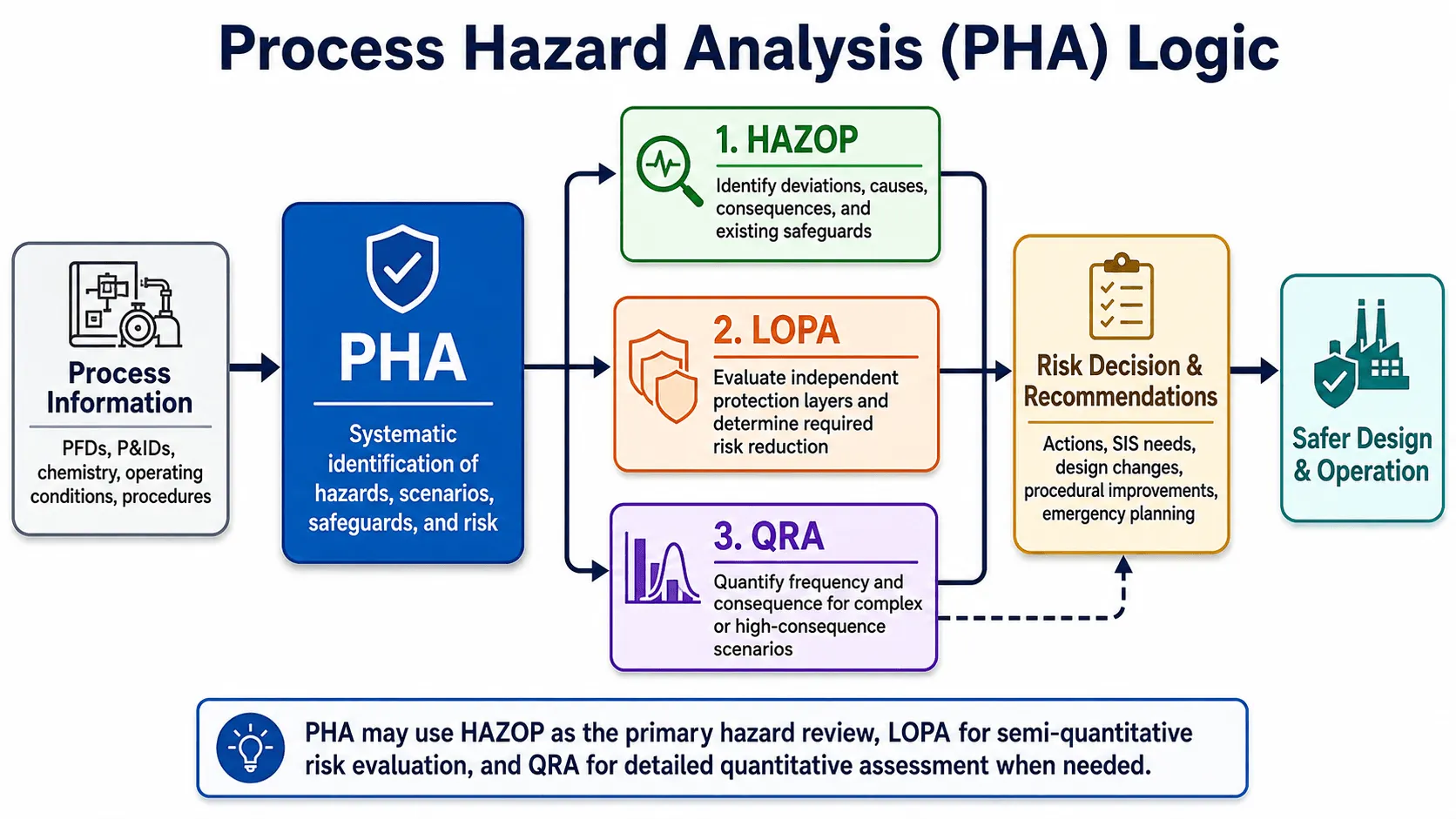
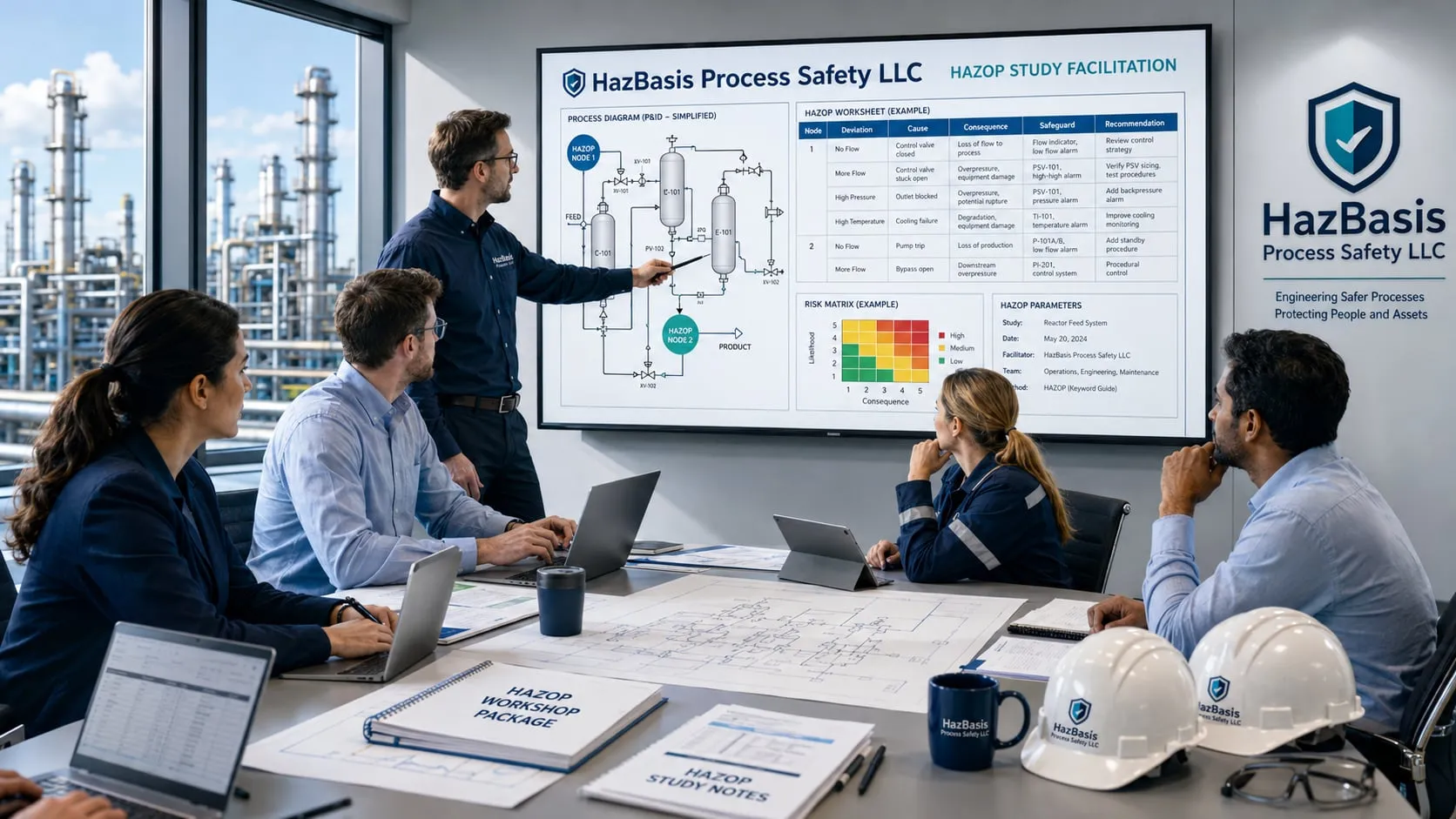
A systematic node by node review using process parameters and guidewords to identify deviations from design intent, causes, consequences, safeguards, and recommendations.
Layer of Protection Analysis (LOPA)
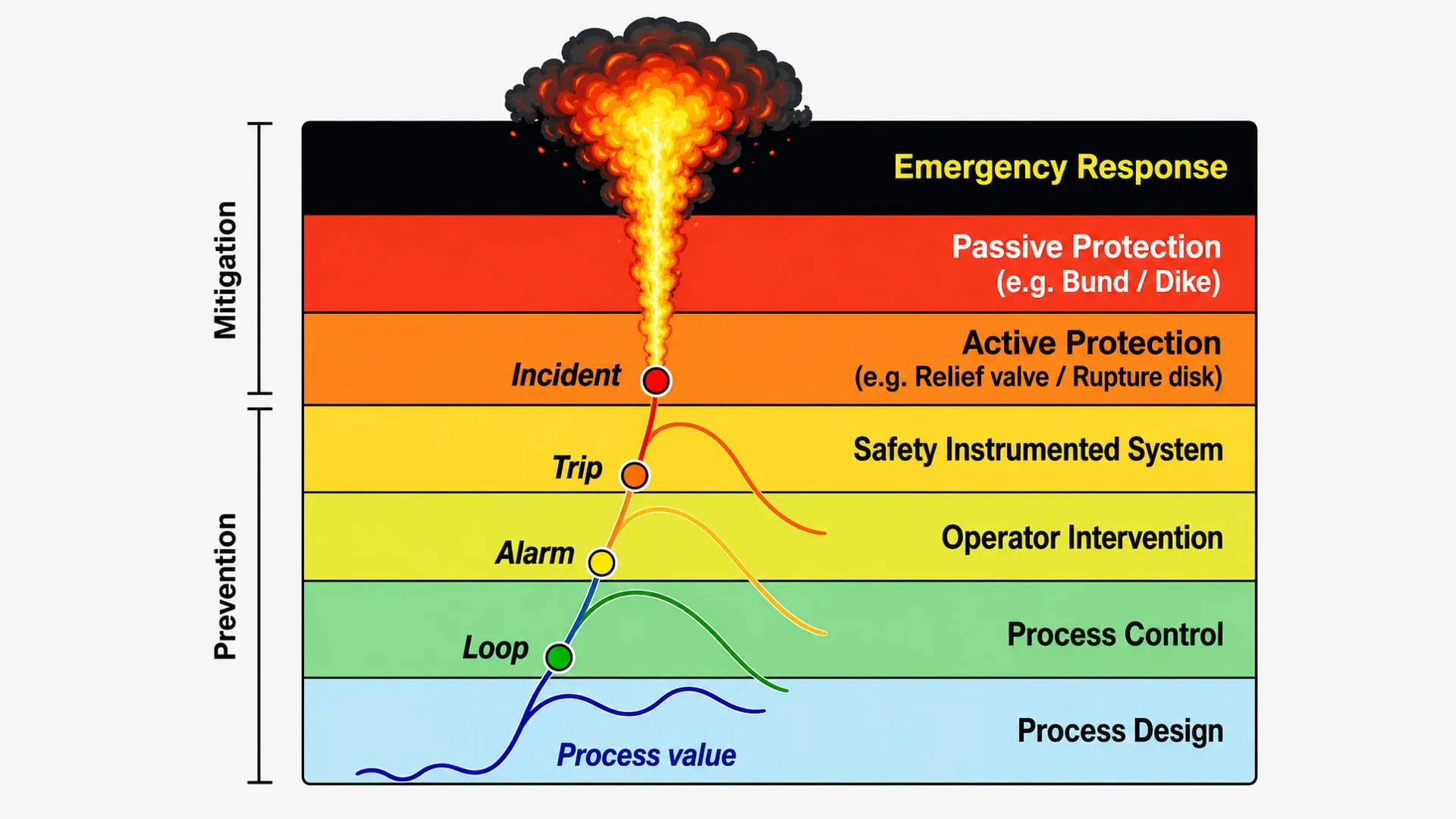
A scenario based semi-quantitative analysis used to evaluate initiating event frequency, independent protection layers, and the remaining risk gap.
Quantitative Risk Assessment (QRA)
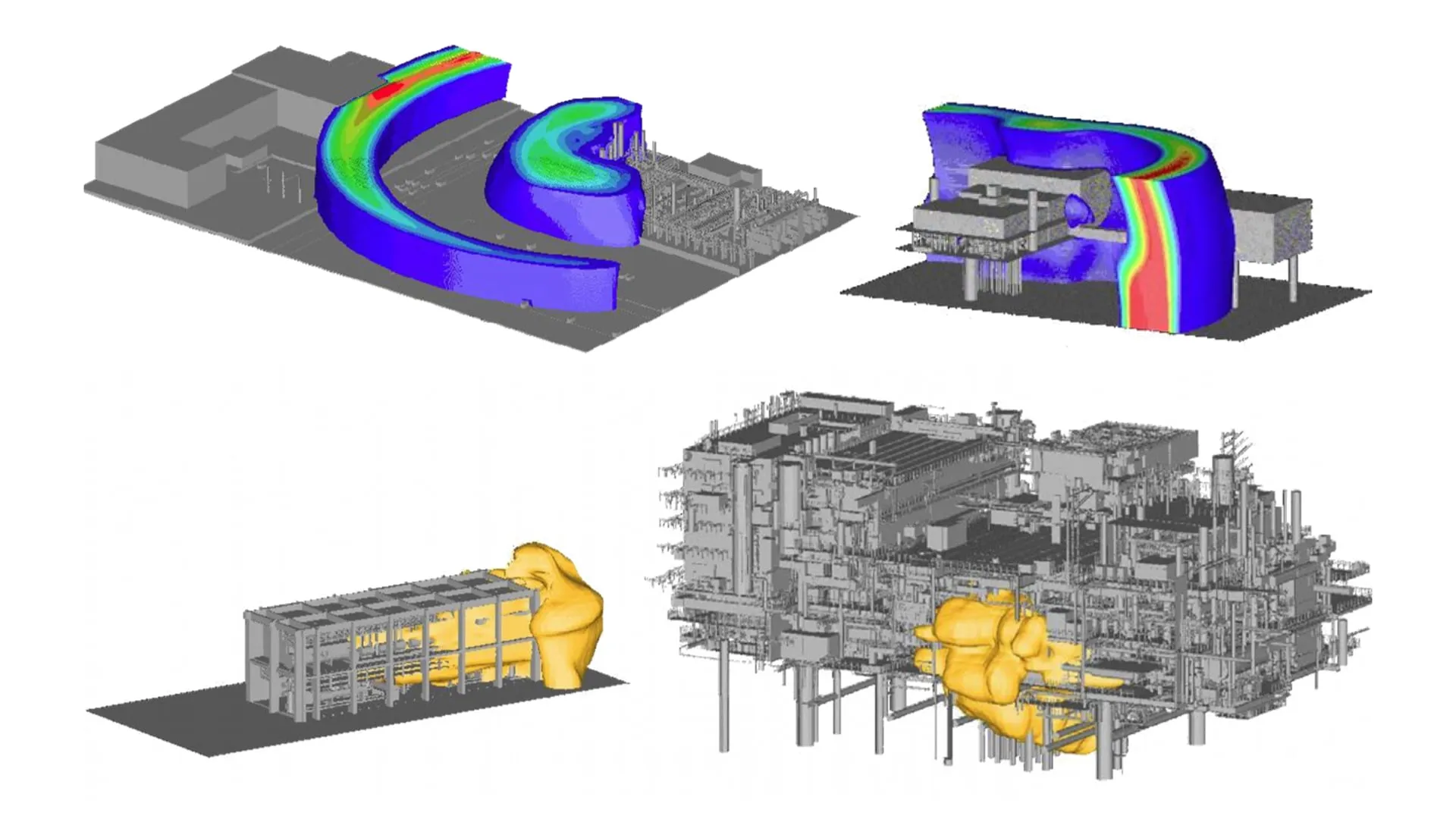
A numerical evaluation of release frequencies, event sequences, physical effects, individual or societal risk, and risk reduction alternatives.
Need to scope a PHA, HAZOP, LOPA, or QRA project? Reach out and we’ll help.
What Hazards Can a PHA Evaluate?
- Loss of containment from vessels, piping, hoses, transfer connections, seals, and rotating equipment
- Overpressure, vacuum, blocked outlets, thermal expansion, runaway reactions, and relief system challenges
- Loss of cooling, heating, agitation, inerting, ventilation, utilities, or instrument air
- Incorrect material addition, cross contamination, decomposition, polymerization, and incompatible reactions
- Flammable atmospheres, combustible dust clouds, ignition sources, fires, explosions, and escalation
- Toxic releases, dispersion, exposure, occupied building impacts, and offsite consequences
- Human error during startup, shutdown, sampling, cleaning, maintenance, line opening, and emergency response
- Control system failures, alarm failures, bypassed interlocks, common cause failures, and cybersecurity related loss of function where applicable
- External events such as fire exposure, vehicle impact, flooding, severe weather, power loss, and adjacent unit incidents
Our PHA Work Process
Step 1: Project Scoping. Define process boundaries, objectives, methodology, team composition, workshop duration, schedule, and deliverables.
Step 2: Document Review. Review current process safety information, including process descriptions, PFDs, P&IDs, chemical and reaction data, relief documentation, operating procedures, cause and effect diagrams, plot plans, previous PHAs, incident records, and management of change files.
Step 3: Facility Walkdown. When appropriate, compare drawings and procedures with the actual equipment configuration, field conditions, and operating practices.
Step 4: Facilitated Workshop. Guide the multidisciplinary team through a structured evaluation of causes, consequences, safeguards, risk rankings, and recommendations.
Step 5: Technical Quality Review. Check worksheets for consistency, scenario completeness, safeguard validity, recommendation clarity, and alignment with the agreed methodology.
Step 6: Final Report and Action Register. Provide an organized record that supports ownership assignment, recommendation tracking, management review, and future PHA revalidation.
Typical PHA Deliverables
- Executive summary and study objectives
- Process boundaries, methodology, assumptions, and risk ranking criteria
- PHA team roster, workshop dates, and documents reviewed
- HAZOP or What-If/Checklist worksheets
- LOPA worksheets for selected scenarios, when included in scope
- Consequence modeling or QRA results, when included in scope
- Risk ranked recommendations with clear safety intent
- Action item register suitable for assignment and closure tracking
- Final report in editable and PDF formats, as agreed
When Should You Conduct or Update a PHA?
- A capital project decision requiring comparison of alternative safeguards or layouts
- A new facility, production line, pilot plant, or process design
- A process chemistry, raw material, operating condition, or capacity change
- New equipment, control logic, alarm, interlock, relief device, or shutdown function
- A management of change review for a significant modification
- A five year PHA update or revalidation for a covered process
- An incident, near miss, audit finding, insurer recommendation, or regulatory concern
- An aging process with outdated drawings, undocumented safeguards, or repeated abnormal events
Why Choose HazBasis
Our work is centered on preventing industrial fires, explosions, toxic releases, reactive incidents, and process equipment failures, not on producing documentation for its own sake. We facilitate independently: we challenge assumptions, keep the team focused on credible hazard scenarios, and separate hazard analysis from routine design discussion rather than letting the workshop drift into one.
When a PHA identifies an unresolved risk question, we can extend the evaluation directly through LOPA, consequence modeling, pressure relief analysis, reactive chemical testing, combustible dust testing, facility siting, or QRA, so the question actually gets answered rather than flagged and left open. Recommendations are written to communicate the required safety outcome while leaving room for the facility to evaluate workable engineering and operational solutions, and reports are organized for management review, action tracking, regulatory or insurer review, and future revalidation.
FAQ
What is the difference between PHA and HAZOP?
PHA is the overall hazard-evaluation activity. HAZOP is one recognized methodology that can be used to perform a PHA. Other methods include What-If, Checklist, What-If/Checklist, FMEA, fault-tree analysis, and appropriate equivalent methods.
Should we use HAZOP or What-If/Checklist?
HAZOP is generally preferred for complex processes where deviations from design intent must be evaluated systematically. What-If/Checklist may be more efficient for relatively simple systems, packaged equipment, laboratories, utilities, or targeted modifications. The final method should match the process complexity and project objective.
Is LOPA part of a HAZOP?
LOPA is normally performed after a HAZOP or other PHA identifies a scenario that requires more detailed risk evaluation. The HAZOP identifies the scenario and safeguards; LOPA evaluates the frequency and risk reduction more explicitly.
Can HazBasis perform a five-year PHA revalidation?
Yes. The scope can include review of the previous PHA, process changes, management-of-change records, incident history, safeguard status, operating experience, and new technical information.
Can a PHA be facilitated remotely?
Many workshops can be conducted remotely when current drawings and process information are available and the right team members can participate. An onsite walkdown may still be advisable for existing or complex facilities.
How long does a PHA take?
Duration depends on process complexity, drawing quality, number of nodes or systems, study method, team availability, and whether LOPA or consequence modeling is included. HazBasis defines the expected duration during scoping.