
What This Test Answers
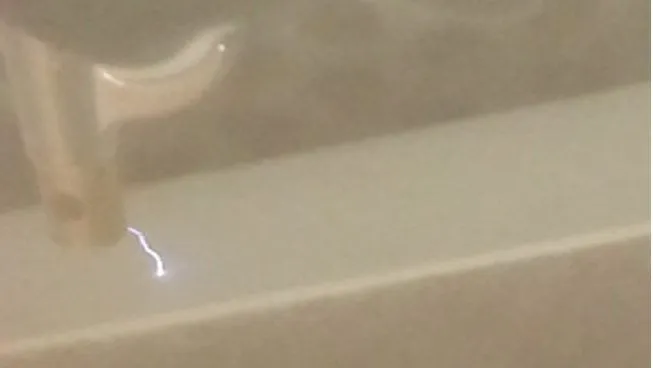
This test evaluates charge accumulation and spark discharge from conductive objects that are electrically isolated by insulating supports or materials. The result applies to the submitted sample, preparation, conditioning, and test conditions stated in the report. As with any single lab value, we’re careful not to generalize it as a universal property of the material, since particle size, moisture, temperature, pressure, geometry, and formulation can all shift the outcome.
Not sure if an isolated part in your equipment needs testing? Reach out and we’ll help you scope it.
Test Method and Standard
The object is charged by induction, contact, or a representative process charging mechanism, then approached with a grounded probe or discharge path. Voltage, capacitance, transferred charge, or ignition response is measured as appropriate. Testing follows IEC TS 60079-32-1 and NFPA 77 principles, with a project specific test setup, or an agreed project specific method, and the quotation identifies the governing method before work begins.
What You Receive
- Measured discharge behavior from the isolated object
- Charging mechanism, capacitance, geometry, and grounding condition
- Engineering interpretation for the intended flammable atmosphere
How the Data Supports Decisions
This result helps determine whether isolated metal parts require bonding or redesign, informs maximum allowable object size or capacitance, and supports inspection and maintenance controls for grounding continuity.
When to Order This Test
- Metal components are mounted on plastic, gaskets, bearings, hoses, or coatings
- Operators have reported shocks or visible sparks
- A machine includes temporary or movable conductive parts
Sample Submission Guidance
The actual assembly or a representative mockup is preferred. Provide drawings, materials, dimensions, grounding arrangement, and the expected charging mechanism. Include the SDS, composition or trade name information, physical form, process description, and whether the sample should be tested as received or prepared to a different condition.
Why Choose HazBasis
- Isolated conductors are one of the more commonly missed ignition sources precisely because they look grounded, a metal part sitting on a plastic bushing or gasket looks the same as one that’s properly bonded until someone actually checks continuity. We test the assembly as installed, not as designed on paper.
- The result is written toward a specific engineering answer, whether the part needs bonding, a size limit, or a maintenance inspection point, rather than a generic statement that isolated conductors can be hazardous.
- If operators have already reported shocks or visible sparking, we treat that as a real lead and design the charging scenario to reproduce what’s actually happening, rather than running a standard test unrelated to the reported event.
FAQ
What does Isolated Spark testing measure?
Evaluates charge accumulation and spark discharge from conductive objects that are electrically isolated by insulating supports or materials.
Which standard will be used?
IEC TS 60079-32-1 and NFPA 77 principles; project-specific test setup. The final method depends on the sample, project objective, and any customer or regulatory requirements.
Why are isolated conductors often more hazardous than insulators?
A conductor can store charge over its entire capacitance and release much of it in a single spark. An insulator often produces more localized discharges, although some insulating configurations can also be highly incendive.