
Pressure Relief Valve Sizing, Rupture Disk Review & DIERS Emergency Relief Design
Pressure Relief System Design Analysis Services
DIERS Technology-Informed and PSM-Aligned Relief System Review for Chemical, Reactive, Flammable, and Pressure-Containing Processes
HazBasis Process Safety provides professional Pressure Relief System Design Analysis services for industrial facilities that need a clear, defensible relief design basis for vessels, reactors, tanks, process equipment, piping systems, and emergency venting scenarios.
We help chemical manufacturers, pharmaceutical facilities, battery and electrolyte operations, pilot plants, process safety teams, engineering firms, insurers, and facility owners evaluate whether pressure relief systems are properly designed, documented, and aligned with Process Safety Management expectations.
Need a Pressure Relief System Design Analysis? Reach out and we’ll help.
What Is a Pressure Relief System Design Analysis?
Pressure relief devices are often the last layer of protection standing between normal operation and a vessel rupture, runaway reaction, or fire exposure event. A relief valve or rupture disk can look perfectly fine sitting on a P&ID. The real question is whether the credible overpressure scenario behind it was actually identified, sized, and documented correctly, or whether the number on the datasheet is just inherited from an old calculation nobody has revisited.
HazBasis evaluates pressure relief systems for reactors, pressure vessels, storage tanks, process tanks, distillation systems, heat exchangers, and piping, covering gas, liquid, vapor, and two-phase relief, as well as the discharge, containment, and effluent handling side of the system. The analysis is built to support safer design, PSM documentation, PHA recommendations, MOC review, PSSR readiness, and authority or insurer facing technical review.
When You Need This Service
You may need a relief system analysis when you’re:
- Designing a new process, reactor, tank, or pressure vessel
- Scaling up a chemical reaction from lab to pilot or production scale
- Modifying process chemistry, batch size, equipment, feed rate, or operating limits
- Performing a PHA, HAZOP, LOPA, MOC, or PSSR
- Responding to a PHA recommendation involving PSV or rupture disk adequacy
- Reviewing legacy relief devices with missing or outdated design basis
- Evaluating a runaway reaction, overpressure event, relief valve lift, or near miss
- Installing or modifying relief valves, rupture disks, vents, flare headers, scrubbers, or discharge piping
- Reviewing whether a relief system can handle two-phase, flashing, foamy, or reactive discharge
- Preparing documentation for insurer, corporate safety, AHJ, or engineering review
DIERS Technology Informed Relief Analysis
Not every relief scenario is a simple vapor sizing problem. Reactive systems, foamy systems, flashing liquids, viscous fluids, and two-phase vapor liquid flow all need a more specialized evaluation, and that’s where HazBasis applies DIERS technology informed concepts: emergency relief for runaway reaction scenarios, two-phase vapor liquid relief considerations, reactive chemical venting basis, self-heating and thermal decomposition scenarios, gas generation and pressure rise evaluation, and adiabatic calorimetry data interpretation from VSP, ARC, DSC, or reaction calorimetry testing.
The objective is a relief design basis that reflects the actual process hazard, not a generic nameplate calculation that happens to produce a number.
PSM Aligned Pressure Relief Documentation
For PSM covered or PSM relevant processes, relief systems need to be backed by clear process safety information and design basis documentation, not just a device on a P&ID. HazBasis helps develop or review the relief system design basis, the credible overpressure scenario list, relief device sizing calculations, set pressure and accumulation basis, protected equipment data, process design conditions, P&ID relief device documentation, relief device datasheets, and discharge location and effluent handling basis. Deliverables are written to be usable by process safety, engineering, management, insurer, and reviewer audiences alike.
Our Review Process
Step 1: Define the System. We review the protected equipment, process conditions, relief devices, P&IDs, equipment datasheets, operating limits, and project objectives.
Step 2: Identify Credible Scenarios. We develop or review the credible overpressure scenario list and identify the governing relief cases.
Step 3: Evaluate Relief Requirements. We evaluate relief load, flow regime, pressure basis, reactive or two-phase considerations, and available test or process data.
Step 4: Review Device and Discharge Basis. We review relief device selection, sizing basis, discharge path, backpressure concerns, effluent handling, and documentation gaps.
Step 5: Develop Recommendations. We provide practical recommendations for calculation updates, additional data, testing, engineering changes, procedural controls, or further analysis.
Step 6: Support Closeout. We support follow-up with engineering, EHS, operations, management, insurers, or project reviewers.
What We Deliver
Pressure Relief Design Basis Report
A technical report covering the project and process description, the PSM aligned basis, protected equipment summary, relief device inventory, design conditions and operating limits, credible overpressure scenario identification, scenario screening and governing case selection, relief load calculations, and the relief device sizing basis. It closes with existing safeguards, identified gaps, and action items for engineering, operations, EHS, and management.
Overpressure Scenario Analysis
We identify and evaluate credible scenarios such as external fire exposure, blocked outlet, control valve failure, utility failure, cooling failure, loss of condenser, thermal expansion, tube rupture, gas blowby, reverse flow, pump deadhead, excess feed, wrong material charge, runaway reaction, thermal decomposition, contamination triggered reaction, loss of agitation, and relief header backpressure. Each one is reviewed for its initiating cause, relief requirement, existing safeguards, and impact on the design basis.
Reactive and Two-Phase Relief Review
Reactive and two-phase cases tend to be where relief sizing gets genuinely difficult. We review runaway reaction test data, adiabatic temperature and pressure rise, gas and vapor generation rate, foaming and two-phase flow potential, flashing liquid behavior, relief onset conditions, vessel fill level and disengagement behavior, and effluent handling requirements down to quench, blowdown, scrubber, flare, or containment considerations. This work integrates directly with a Chemical Reaction Hazard Analysis when process chemistry is what’s driving the relief requirement.
PSV, Rupture Disk, and Emergency Vent Review
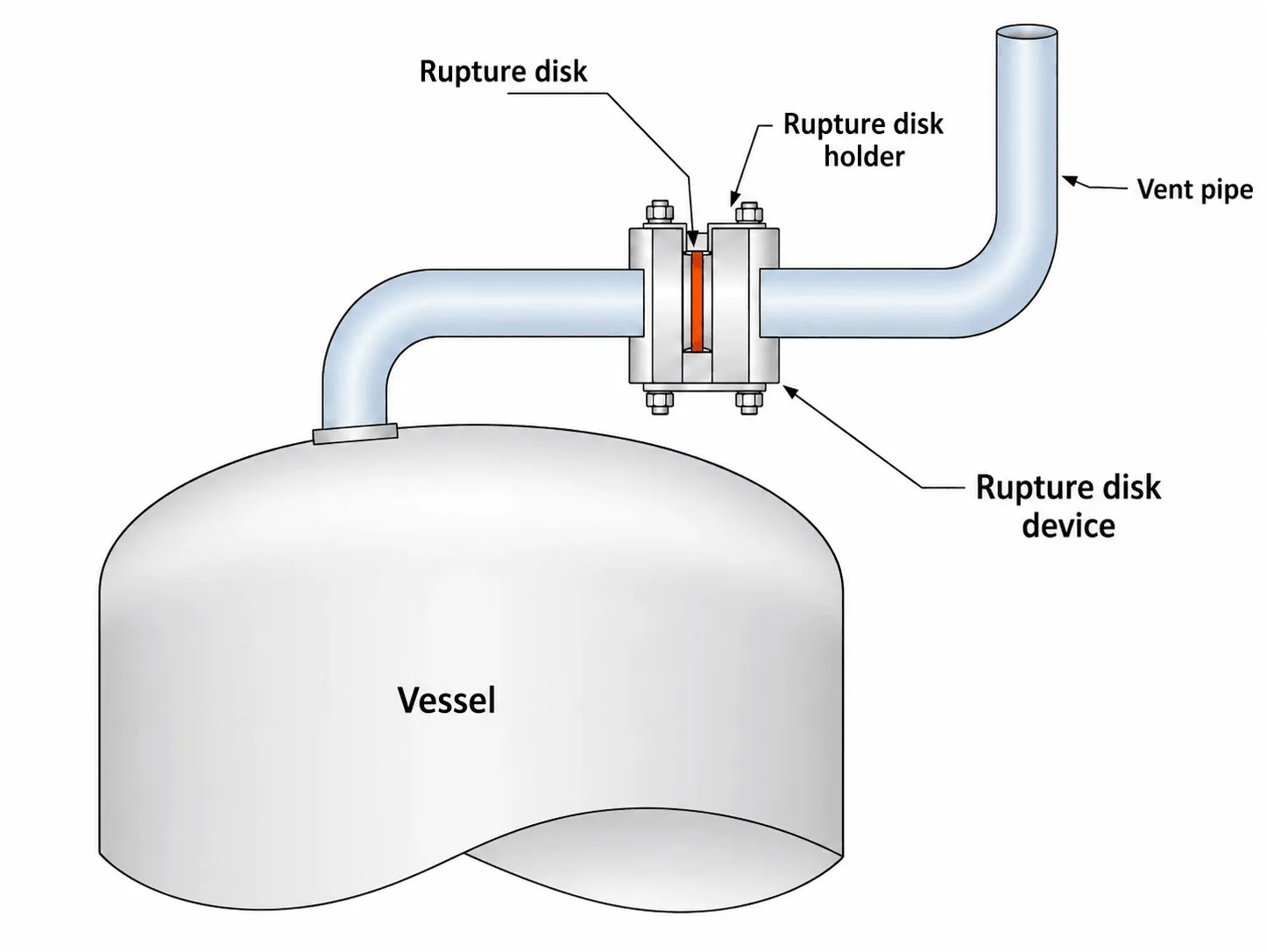
We evaluate relief protection across pressure safety valves, rupture disks, conservation vents, emergency vents, vacuum relief devices, thermal relief valves, relief headers, vent piping, and flare, scrubber, knockout, or containment systems, focused on whether the selected device and system actually fit the credible scenario, service conditions, flow regime, and discharge route, not just whether a device exists.
PHA, MOC, and PSSR Support
Relief system questions come up constantly during process safety reviews. We support PHA and HAZOP preparation, relief system gap review ahead of a PHA, PHA recommendation resolution, MOC review for process or equipment changes, PSSR readiness review, and relief device documentation updates, so relief issues don’t sit as vague action items with no clear technical path to closure.
Typical Questions We Help Answer
- Is the existing PSV or rupture disk adequately sized?
- What is the credible governing overpressure scenario?
- Is the relief device protecting the correct equipment?
- Is the documented relief design basis complete?
- Could this reaction generate pressure faster than the relief system can handle?
- Is two-phase relief credible for this service?
- Is the relief discharge routed to a safe location?
- Could backpressure affect relief capacity?
- Is a rupture disk or relief valve more appropriate here?
- Does this process change require relief system revalidation?
- What data is needed for reactive relief sizing?
- Can the existing relief system support scale up?
- Are PHA recommendations related to relief systems properly closed?
Why Choose HazBasis
HazBasis combines process safety, reactive chemical hazard evaluation, DIERS technology informed relief analysis, thermal hazard testing interpretation, fire and explosion analysis, PHA support, and incident investigation experience in one team.
Our pressure relief system work is:
- PSM aligned and DIERS technology informed where applicable
- Technically defensible and practical for engineering and operations
- Focused on credible overpressure scenarios, not a simple valve size check
- Suitable for PHA, MOC, and PSSR support
- Clear for EHS, management, insurers, and reviewers
We evaluate the process hazard, credible scenarios, material behavior, reaction potential, discharge conditions, and safeguard basis that determine whether the relief system can actually perform its protective function when it’s called on.
FAQ
What is Pressure Relief System Design Analysis?
Pressure Relief System Design Analysis is a technical review of relief devices and relief systems to determine whether credible overpressure scenarios have been identified and whether the relief system is properly sized, documented, and suitable for the process hazard.
How is this related to PSM?
PSM requires process safety information to include relief system design and design basis for covered processes. Relief system analysis also supports PHA, MOC, PSSR, mechanical integrity, operating procedures, and incident investigation.
What is DIERS technology?
DIERS technology refers to methods developed through the Design Institute for Emergency Relief Systems for emergency relief system design, especially for reactive systems, runaway reactions, and two-phase vapor-liquid relief conditions.
When is DIERS-type analysis needed?
DIERS-type analysis may be needed for reactive systems, runaway reactions, foamy systems, flashing liquids, viscous materials, two-phase flow, gas-generating reactions, or emergency venting scenarios where simple vapor or liquid relief sizing may not be adequate.
Can HazBasis review existing PSV calculations?
Yes. HazBasis can review existing PSV or rupture disk calculations, identify missing scenarios, evaluate assumptions, and recommend updates where the design basis is incomplete or outdated.
Can this support a PHA or MOC?
Yes. Pressure relief system design analysis is often needed to support PHA recommendations, MOC evaluations, process changes, scale-up, PSSR, and mechanical integrity programs.
Can HazBasis help determine what testing is needed?
Yes. For reactive or uncertain systems, HazBasis can help identify whether additional thermal hazard, gas generation, reaction calorimetry, ARC, VSP, DSC, or compatibility testing may be needed.
Can this be performed remotely?
Many reviews can be performed remotely if P&IDs, datasheets, operating conditions, chemical information, relief device records, and existing calculations are available. Complex systems or field verification may require an on-site walkdown.