

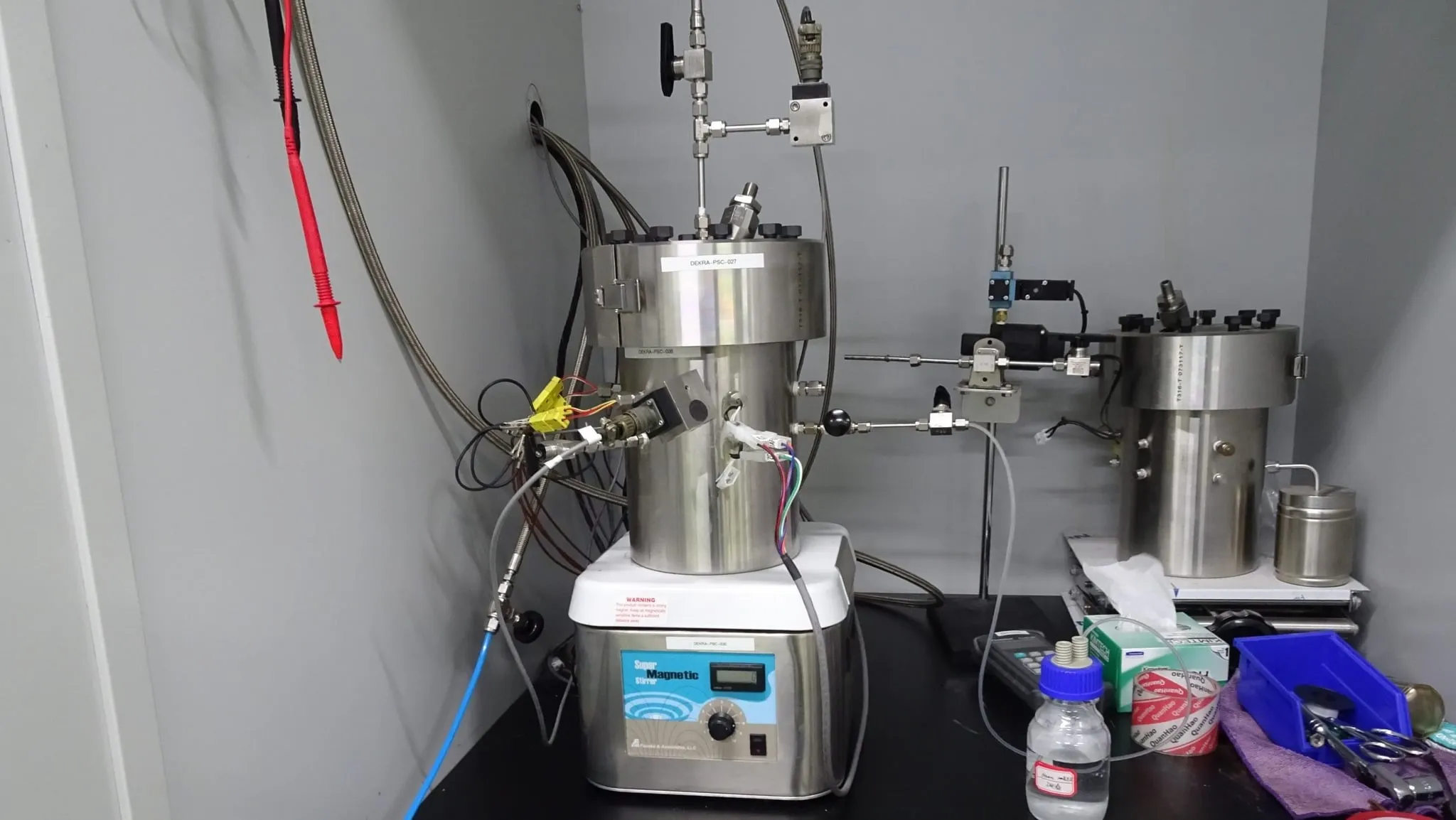
What Vent Sizing Package (VSP) Testing Answers
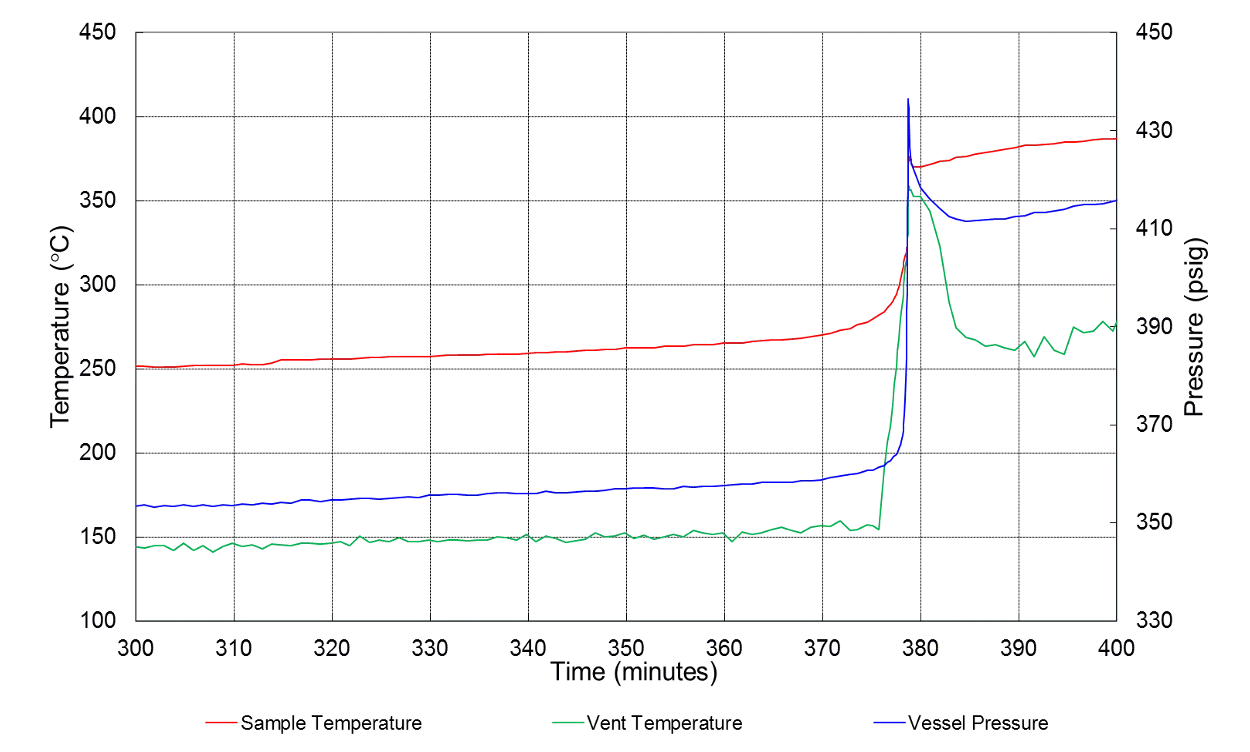
This test evaluates how a reactive system generates temperature and pressure during a runaway event and provides data needed for emergency relief evaluations. VSP testing helps determine relief loads, pressure-generation behavior, and whether vapor, gas, or two-phase venting behavior may control the design.
The result applies to the submitted sample, preparation, conditioning, and test conditions documented in the report. The data supports engineering evaluations by representing reactive behavior under low-thermal-inertia conditions that more closely reflect larger process systems than traditional high-thermal-mass testing.
Not sure if VSP testing is the right approach for your relief-design question? Reach out and we’ll help you scope the testing.
Test Method and Standard
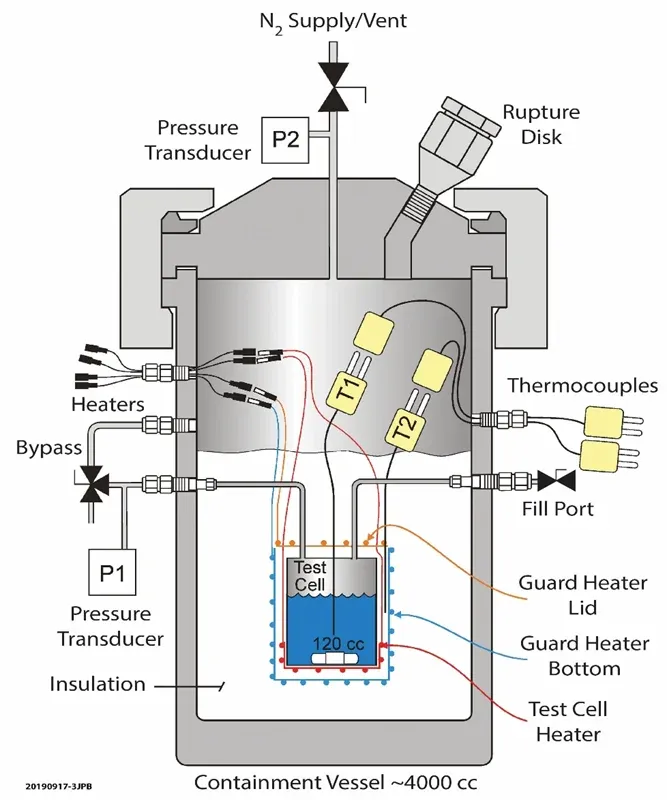
A Vent Sizing Package (VSP) is a low-thermal-inertia adiabatic calorimeter used to evaluate reactive pressure generation and emergency relief scenarios. The system monitors temperature and pressure response during a controlled runaway or process upset simulation.
HazBasis develops the test approach based on the credible scenario, including reaction chemistry, operating conditions, fill level, pressure conditions, cooling failure scenarios, and relief objectives. Testing may evaluate pressure rise, gas generation, venting response, and two-phase behavior where applicable.
What You Receive
- Documented test conditions, sample information, and scenario basis
- Temperature and pressure history data
- Reactive pressure-generation and venting behavior results
- Evaluation of vapor, gas, or hybrid pressure-generation behavior where applicable
- Engineering interpretation for relief design and process safety decisions
How the Data Supports Decisions
VSP data provides experimental input for emergency relief system design and reactive hazard evaluations. The results support evaluation of relief loads, vent sizing, pressure accumulation, and two-phase flow behavior where vapor-liquid expansion or entrainment may affect required protection.
The data can also support DIERS-based calculations, relief-system revalidation, PHA/HAZOP reviews, incident investigations, and evaluation of downstream relief handling systems such as catch tanks, quench systems, scrubbers, or containment equipment.
When to Order This Test
- A reactive process requires emergency relief evaluation
- A runaway reaction may generate significant pressure or gas release
- Relief-device sizing or revalidation requires experimental data
- A batch or semi-batch reactor involves credible loss-of-control scenarios
- Process changes, scale-up, formulation changes, or equipment modifications may affect relief requirements
- A PHA, HAZOP, incident investigation, or engineering review identifies uncertainty in reactive venting behavior
Sample Submission Guidance
Sample requirements depend on the reaction scenario, expected pressure behavior, test configuration, and project objective. HazBasis confirms the required sample quantity, preparation requirements, and supporting information before testing begins.
Include the SDS, reaction chemistry, composition information, process description, operating conditions, equipment details, relief-system information, and the specific emergency relief question the testing needs to address.
Why Choose HazBasis
Emergency relief design for reactive systems requires more than a pressure measurement—it requires understanding how chemistry, process conditions, and venting behavior interact during a loss-of-control event.
HazBasis combines reactive hazard testing with process safety expertise to help translate VSP data into practical engineering decisions. We focus on generating the information needed for relief evaluation, safeguard validation, and safer process design.
Our testing approach is built around the actual process scenario, helping clients develop defensible relief-design inputs rather than relying on assumptions or generic hazard evaluations.
FAQ
When is VSP testing preferred over ARC testing?
VSP is often preferred when low thermal inertia, emergency vent sizing, gas generation, or two-phase relief behavior is central to the decision. ARC remains valuable for thermal stability and time-dependent runaway evaluation.
What does low phi mean?
Phi is the ratio of the combined sample-plus-test-cell heat capacity to the sample heat capacity. A value closer to one reduces the energy absorbed by the test cell and can better represent large-scale adiabatic behavior.
Can VSP testing identify two-phase relief?
It can provide evidence of liquid swelling, entrainment, vapor-liquid behavior, and pressure response. The final design requires appropriate DIERS classification and hydraulic modeling.
Does a VSP test directly provide the final relief-valve size?
The test supplies critical data. Final sizing also requires process scenario definition, equipment and relief conditions, physical properties, allowable overpressure, device coefficients, piping, backpressure, and applicable codes and standards.
Can VSP testing support an existing relief-system review?
Yes. It can provide a more defensible reactive relief basis when a recipe, concentration, batch size, operating condition, or process chemistry has changed or prior sizing assumptions are uncertain.