

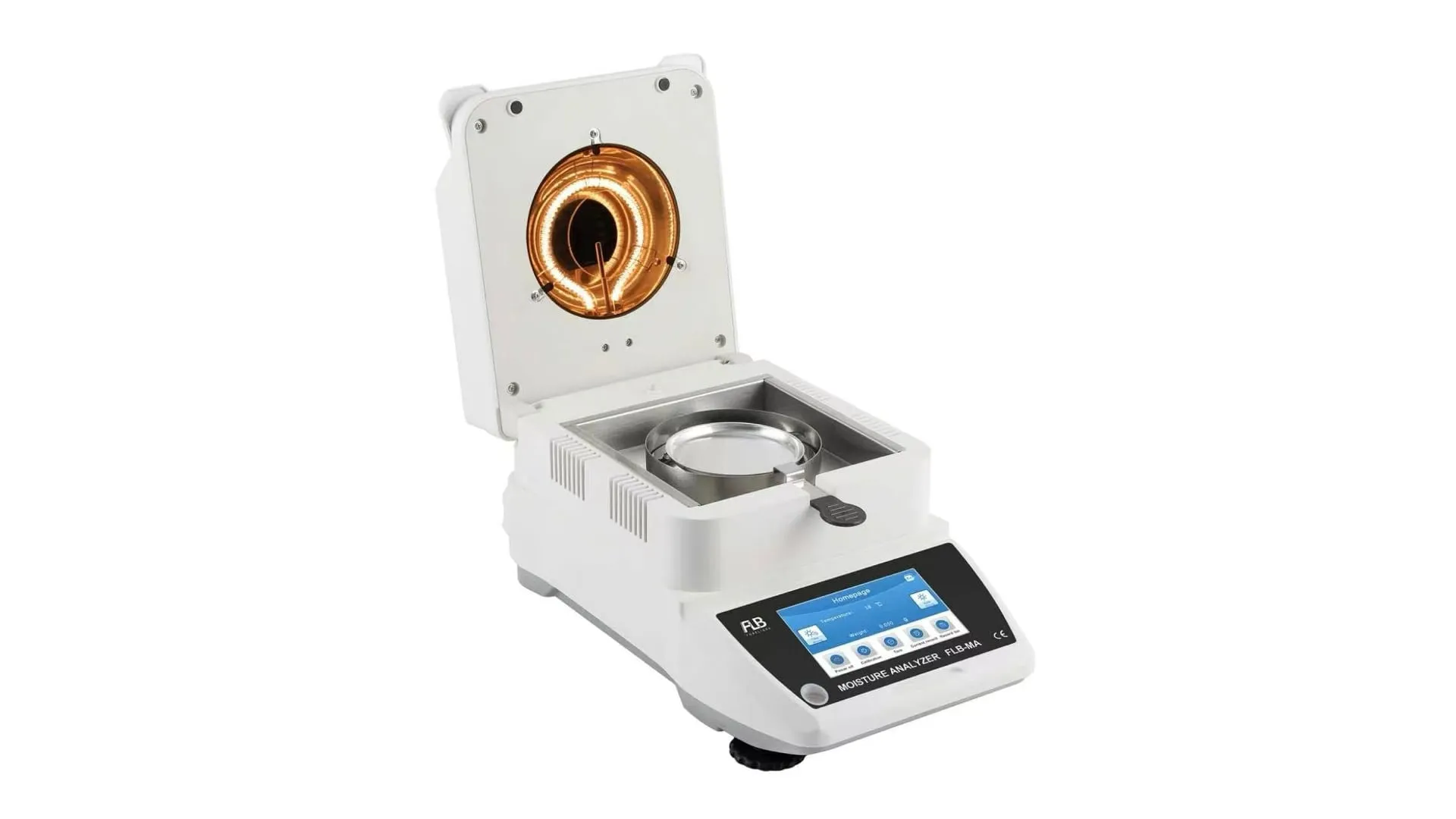
What Moisture Content Testing Answers
This test measures mass loss associated with moisture and other volatile components under a defined drying program. The result applies to the submitted sample, preparation, conditioning, and test conditions stated in the report. As with any single lab value, we’re careful not to generalize it as a universal property of the material, since particle size, moisture, temperature, pressure, geometry, and formulation can all shift the outcome.
Not sure if moisture is affecting your test results? Reach out and we’ll help you scope it.
Test Method and Standard
A representative sample is weighed, dried under specified temperature and atmosphere conditions, cooled or stabilized, and reweighed. For some materials, thermogravimetric analysis is used to separate volatile loss regions and document the temperature profile. Testing follows a method selected for the sample and objective, including ASTM E1868 for TGA LOD where applicable, or an agreed project specific method, and the quotation identifies the governing method before work begins.
What You Receive
- Percent mass loss under the specified conditions
- Drying temperature, time, atmosphere, and endpoint criteria
- Interpretation of how moisture condition relates to subsequent hazard testing
How the Data Supports Decisions
This result helps confirm whether a test sample represents the driest credible process condition, informs drying, storage, and quality control requirements, and supports comparison across suppliers, batches, or conditioned samples.
When to Order This Test
- Moisture is expected to affect dust explosibility or ignition sensitivity
- Your process includes drying, heating, or humidity control
- You need a documented basis for sample conditioning ahead of other testing
Sample Submission Guidance
A small representative amount may be sufficient, but HazBasis confirms the quantity and drying method after reviewing volatility, decomposition potential, and the intended use of the result. Include the SDS, composition or trade name information, physical form, process description, and whether the sample should be tested as received or prepared to a different condition.
Why Choose HazBasis
- Moisture content can swing explosibility and ignition sensitivity results significantly, so we treat this test as a routine check before hazard testing whenever moisture is a plausible variable, not an afterthought added on request.
- Some materials decompose or off-gas alongside moisture loss, which a simple weight loss number can’t distinguish on its own, so we flag when TGA is worth the extra step to separate those effects cleanly.
- If your process runs at the driest credible condition rather than as-received humidity, we help make sure the sample conditioning actually reflects that before it goes into more expensive downstream testing.
FAQ
What does Moisture / LOD testing measure?
Measures mass loss associated with moisture and other volatile components under a defined drying program.
Which standard will be used?
Method selected by sample and objective; ASTM E1868 for TGA LOD when applicable. The final method depends on the sample, project objective, and any customer or regulatory requirements.
Does loss on drying measure only water?
Not always. LOD can include water and other volatile components. The report must state the method and conditions so the result is interpreted correctly.