

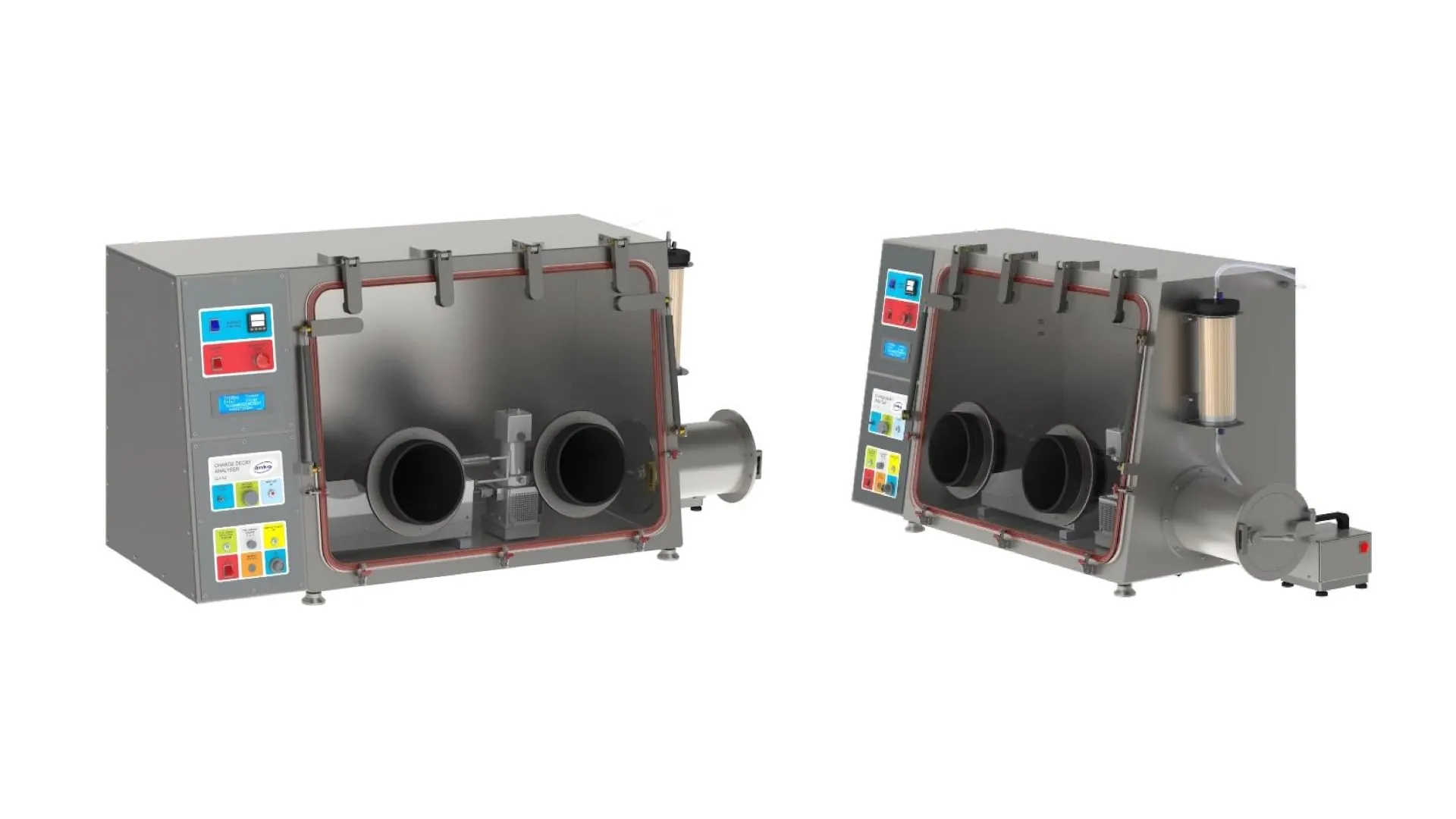
What Charge Decay Testing Answers
This test measures how rapidly an applied electrostatic charge dissipates from a material or object under defined conditions. The result applies to the submitted sample, preparation, conditioning, and test conditions stated in the report. As with any single lab value, we’re careful not to generalize it as a universal property of the material, since particle size, moisture, temperature, pressure, geometry, and formulation can all shift the outcome.
Not sure if you need decay testing on top of resistivity data? Reach out and we’ll help you scope it.
Test Method and Standard
The sample is charged to a defined potential or charge level, and the decay is recorded over time. The reported parameter may be time to a specified percentage or voltage threshold, depending on the material and method. Testing follows an applicable IEC 61340 or MIL-STD method selected for the product, along with NFPA 77 guidance, or an agreed project specific method, and the quotation identifies the governing method before work begins.
What You Receive
- A charge decay curve and relaxation time
- Initial charge, endpoint criterion, humidity, and temperature
- Interpretation for charge accumulation during the actual operation
How the Data Supports Decisions
This result helps determine whether charge can persist between process steps, evaluates the effectiveness of dissipative materials or treatments, and informs required dwell time, grounding, humidity, or handling controls.
When to Order This Test
- Resistance data alone doesn’t reflect how charge actually dissipates in practice
- Films, fabrics, packaging, FIBCs, or coated surfaces need qualification
- An operation involves intermittent charging and discharge events
Sample Submission Guidance
Provide representative finished material or a test coupon large enough for the selected electrode and charging arrangement. Conditioning requirements are confirmed in the project scope. Include the SDS, composition or trade name information, physical form, process description, and whether the sample should be tested as received or prepared to a different condition.
Why Choose HazBasis
- A resistivity measurement tells you a material’s static properties, but decay time tells you what actually happens over the seconds that matter during an operation, and those two don’t always agree. We recommend decay testing specifically when the resistivity number alone isn’t enough to answer the process question.
- Because the result depends heavily on humidity and initial charge level, we document both explicitly rather than reporting a decay time as if it were fixed for the material under any condition.
- Where the operation involves repeated charge and discharge cycles rather than a single event, we interpret the result against that actual rhythm, since a material that dissipates charge fine at rest can still accumulate it under continuous handling.
FAQ
What does Charge Decay testing measure?
Measures how rapidly an applied electrostatic charge dissipates from a material or object under defined conditions.
Which standard will be used?
Applicable IEC 61340 or MIL-STD method selected for the product; NFPA 77 guidance. The final method depends on the sample, project objective, and any customer or regulatory requirements.
Can a material have high resistance but acceptable charge decay?
Yes, depending on geometry, surface condition, and charge leakage paths. Direct decay testing can be more representative than a resistance value alone.