

What Surface Resistivity Testing Answers
This test measures resistance to current flow along a material surface, and supports evaluation of how well that surface dissipates static charge. The result applies to the submitted sample, preparation, conditioning, and test conditions stated in the report. As with any single lab value, we’re careful not to generalize it as a universal property of the material, since particle size, moisture, temperature, pressure, geometry, and formulation can all shift the outcome.
Not sure if surface or bulk resistivity is what you need? Reach out and we’ll help you scope it.
Test Method and Standard
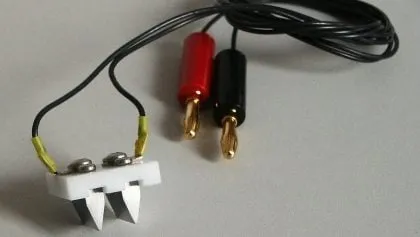
Electrodes with defined geometry are applied to a conditioned sample surface. Current is measured under a specified voltage and time, then converted to surface resistance or resistivity as appropriate. Testing follows ASTM D257 and the IEC 61340 series where applicable, along with NFPA 77 guidance, or an agreed project specific method, and the quotation identifies the governing method before work begins.
What You Receive
- Surface resistance or resistivity under documented conditions
- Test geometry, voltage, humidity, and electrification time
- Practical interpretation for the intended equipment or material use
How the Data Supports Decisions
This result supports selection between dissipative and insulating surfaces, informs evaluation of coatings, liners, work surfaces, floors, and packaging, and helps determine whether grounding, cleaning controls, or humidity management are needed.
When to Order This Test
- Charge can accumulate on a material surface in your process
- Coatings, contamination, or wear may change surface behavior over time
- A material is being considered for use in a flammable area
Sample Submission Guidance
Flat coupons are preferred where possible. HazBasis confirms minimum dimensions, thickness, and conditioning requirements for irregular parts or powders. Include the SDS, composition or trade name information, physical form, process description, and whether the sample should be tested as received or prepared to a different condition.
Why Choose HazBasis
- Surface behavior and bulk behavior don’t always tell the same story, a coated or contaminated surface can behave very differently than the material underneath, so we’re clear about which one your application actually needs before testing begins.
- Wear, cleaning residue, and contamination can degrade a surface’s dissipative properties over time, so where relevant we note whether the tested condition represents a new surface or one closer to in-service condition.
- If the result is going to inform a flooring, coating, or work surface decision for a classified area, we write the interpretation toward that specific use case rather than a generic pass or fail statement.
FAQ
What does Surface Resistivity testing measure?
Measures resistance to current flow along a material surface and supports evaluation of surface charge dissipation.
Which standard will be used?
ASTM D257 and IEC 61340 series as applicable; NFPA 77 guidance. The final method depends on the sample, project objective, and any customer or regulatory requirements.
Are surface and volume resistivity interchangeable?
No. Surface resistivity describes conduction along the surface; volume resistivity describes conduction through the bulk. Either or both may control charge retention.