Professional Process Safety Training
In-House, Onsite, and Live Virtual Training for Industrial Risk Reduction
Build practical competency in fire, explosion, combustible dust, reactive chemical, electrostatic, pressure relief, and process risk-management hazards.
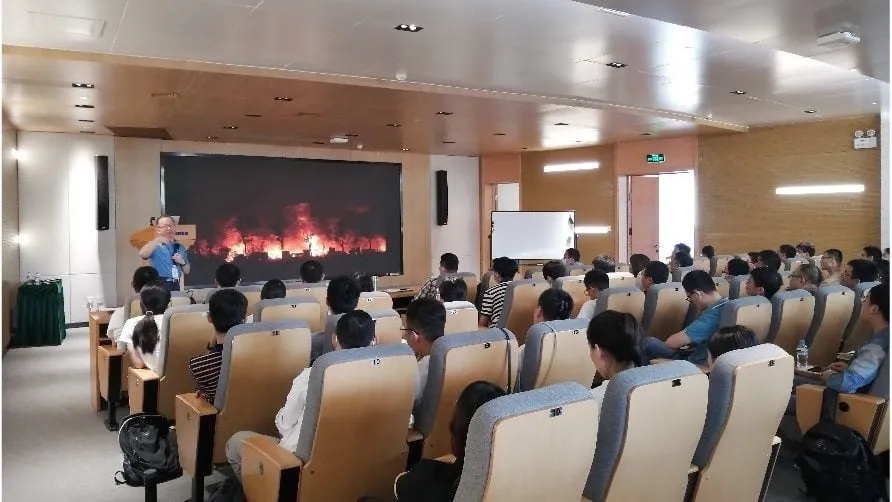
HazBasis Process Safety provides technically rigorous, instructor-led training for engineers, operators, EHS professionals, laboratory teams, project personnel, and management. Each course connects fundamental principles with real industrial equipment, operating conditions, hazard scenarios, and risk-control decisions.
Request a customized training proposal
Core Training Courses
- Fire and Explosion Hazard Identification
- Combustible Dust Hazards and Dust Hazard Analysis (DHA)
- Flammable Liquid, Vapor, and Gas Hazard Analysis
- Chemical Reactivity Hazards and Process Scale-Up: Fundamentals
- Electrostatic Ignition Hazard Fundamentals
- Pressure Relief System Design Using DIERS Methodology
- Process Safety Management: Beyond the Regulation
- Process Hazard Analysis (PHA)
- Layer of Protection Analysis (LOPA)
- Quantitative Risk Assessment (QRA)
Courses may be delivered individually or combined into a company-specific competency program. Course titles, duration, technical depth, and exercises can be adjusted to match the intended audience.
Practical Training Built Around Real Industrial Hazards
Generic safety presentations rarely provide the technical depth needed to prevent catastrophic incidents. HazBasis training focuses on how hazards develop, how risk is evaluated, and how prevention and mitigation measures should be selected, verified, and sustained.
- What hazardous properties and process conditions must be understood?
- How can a fire, explosion, runaway reaction, overpressure event, or toxic release occur?
- Which process deviations, equipment failures, and human errors can initiate an incident?
- Which safeguards are already present, and are they effective, independent, and reliable?
- What additional engineered, administrative, or procedural controls should be considered?
- How should assumptions, findings, and recommendations be documented and communicated?
Training can incorporate recognized industry practices, applicable regulatory requirements, relevant consensus standards, case histories, and hands-on exercises. Where appropriate and authorized, course examples may be based on the client’s own equipment, materials, process diagrams, operating procedures, or previous hazard-analysis findings.
Detailed Course Descriptions
Combustible Dust Hazards and Dust Hazard Analysis (DHA)
This course explains how combustible dust incidents develop and how a Dust Hazard Analysis should be planned, performed, documented, and maintained. Participants learn to evaluate dust generation, accumulation, dispersion, ignition, explosion propagation, housekeeping, equipment design, and protection systems.
Topics may include:
- Combustible dust fundamentals and explosibility screening
- KSt, Pmax, minimum ignition energy, minimum explosible concentration, minimum ignition temperature, and limiting oxygen concentration
- Dust-cloud, dust-layer, and hybrid-mixture hazards
- Dust collectors, mills, dryers, silos, conveyors, elevators, and process vessels
- Housekeeping, fugitive-dust control, and hidden accumulation
- Ignition-source evaluation for mechanical, electrical, thermal, and electrostatic sources
- Explosion venting, suppression, isolation, and containment
- DHA methodology, documentation, recommendations, and risk prioritization
- Management of change and DHA revalidation
- NFPA 660 concepts and related combustible-dust requirements
Recommended for: Facilities handling powders, granules, fibers, flakes, dusts, or other combustible particulate solids.
Fire and Explosion Hazard Identification
This course provides a structured approach for recognizing fire and explosion hazards involving combustible solids, flammable liquids, vapors, gases, mists, and hybrid mixtures. Participants learn how fuels, oxidants, ignition sources, dispersion, and confinement combine to create hazardous scenarios.
Topics may include:
- Fire triangle and explosion pentagon
- Deflagration and detonation fundamentals
- Flash fires, pool fires, jet fires, and vapor-cloud explosions
- Dust explosions, mist explosions, and hybrid-mixture hazards
- Ignition-source identification and ranking
- Explosion propagation and secondary events
- Hazard-screening methods and scenario development
- Prevention, detection, isolation, suppression, venting, and containment concepts
- Industrial incident case studies and lessons learned
Recommended for: Engineers, EHS professionals, operations personnel, laboratory staff, project teams, maintenance personnel, and facility management.
Flammable Liquid, Vapor, and Gas Hazard Analysis
This course addresses the identification and evaluation of hazards involving flammable liquids, gases, vapors, and mists. Participants learn how material properties, operating conditions, release scenarios, ventilation, ignition sources, and confinement influence fire and explosion risk.
Topics may include:
- Flash point, fire point, autoignition temperature, and vapor pressure
- Lower and upper flammable limits and limiting oxygen concentration
- Evaporation, flashing, gas release, and vapor dispersion
- Pool fires, flash fires, jet fires, fireballs, and vapor-cloud explosions
- Indoor and outdoor release scenarios
- Ventilation, gas detection, and alarm strategy
- Inerting, purging, and oxygen control
- Ignition source control and hazardous-area classification concepts
- Prevention, mitigation, separation, and emergency response considerations
Recommended for: Chemical, pharmaceutical, energy, battery, semiconductor, advanced-manufacturing, and laboratory operations.
Chemical Reactivity Hazards and Process Scale-Up: Fundamentals
This course introduces the fundamentals of chemical reactivity, thermal stability, runaway reactions, pressure generation, and process scale-up. Participants learn why a process that appears manageable at laboratory scale may become hazardous when transferred to pilot or production scale.
Topics may include:
- Reaction thermodynamics and kinetics
- Heat generation, heat removal, and thermal inertia
- Adiabatic temperature rise and maximum temperature of the synthesis reaction
- Self-heating, decomposition, and runaway-reaction scenarios
- Gas and vapor generation during reaction and decomposition
- Cooling failure, agitation failure, incorrect addition, and utility loss
- Accumulation of unreacted material in batch and semi-batch systems
- Scale-up effects and safe operating limits
- DSC, ARC, reaction calorimetry, and adiabatic calorimetry fundamentals
- Runaway-reaction prevention, mitigation, and emergency relief considerations
Recommended for: Chemists, chemical engineers, process-development teams, scale-up engineers, production personnel, laboratory managers, and project teams.
Electrostatic Ignition Hazard Fundamentals
This course explains how static electricity is generated, accumulated, transferred, and discharged during industrial operations. Participants learn how to recognize electrostatic ignition hazards and select appropriate controls for liquids, powders, gases, personnel, equipment, and packaging.
Topics may include:
- Charge generation, separation, accumulation, and relaxation
- Conductive, dissipative, and insulating materials
- Spark, brush, propagating-brush, corona, and cone discharges
- Minimum ignition energy and ignition sensitivity
- Bonding, grounding, and continuity verification
- Conductive and nonconductive containers, liners, hoses, filters, and intermediate bulk containers
- Powder transfer, pneumatic conveying, sieving, milling, and blending
- Flammable-liquid filling, mixing, sampling, and filtration
- Personnel grounding, footwear, flooring, and work practices
- Electrostatic testing, inspection, and verification concepts
- NFPA 77 principles and related industry guidance
Recommended for: Facilities handling flammable liquids, combustible powders, gases, films, plastics, liners, filters, or bulk materials.
Pressure Relief System Design Using DIERS Methodology
This course provides a practical foundation for identifying credible overpressure scenarios and designing emergency pressure relief systems using the Design Institute for Emergency Relief Systems (DIERS) methodology. The course addresses conventional process overpressure as well as reactive, flashing, and two-phase relief conditions that may not be adequately represented by simple vapor-only assumptions.
Topics may include:
- Pressure-relief design basis and the role of relief systems in process risk reduction
- Identification and screening of credible overpressure scenarios
- Blocked outlet, external fire, utility failure, control failure, thermal expansion, gas blowby, and other conventional cases
- Runaway-reaction, decomposition, polymerization, and gas-generation scenarios
- DIERS testing philosophy and selection of representative calorimetry data
- Adiabatic calorimetry, VSP2, ARC, and related test-data interpretation
- Vapor, gas, flashing-liquid, bubbly, churn-turbulent, and two-phase relief behavior
- Homogeneous and heterogeneous two-phase flow concepts
- Relief-load determination and emergency vent sizing fundamentals
- Pressure safety valves, rupture disks, emergency vents, and hybrid relief arrangements
- Relief inlet and discharge piping, backpressure, reaction forces, and disposal-system interactions
- Effluent handling, catch tanks, knockout drums, scrubbers, flare systems, and safe discharge locations
- Documentation of assumptions, design margins, limitations, and required safeguards
- Integration with PHA, LOPA, management of change, mechanical integrity, and process scale-up
Recommended for: Process and chemical engineers, relief-system engineers, process-safety professionals, project engineers, scale-up teams, mechanical engineers, and personnel responsible for reactive-chemical processes or pressure-protection systems.
Process Safety Management: Beyond the Regulation
This course moves beyond basic regulatory awareness and focuses on how an effective Process Safety Management system should function in practice. Participants examine how process-safety elements interact and how weak implementation can allow serious hazards to remain uncontrolled.
Topics may include:
- Process-safety leadership and organizational accountability
- Process-safety information and knowledge management
- Process Hazard Analysis and risk-assessment quality
- Operating procedures, safe operating limits, and competency
- Mechanical integrity and critical-equipment assurance
- Management of change and pre-startup safety review
- Contractor management and hot-work control
- Incident investigation and learning systems
- Emergency planning, audits, and employee participation
- Leading and lagging performance indicators
- Process-safety culture and integration into daily operations
Recommended for: PSM-covered facilities and organizations seeking to strengthen risk management beyond minimum regulatory compliance.
Process Hazard Analysis (PHA)
This course provides practical instruction in identifying process deviations, causes, consequences, safeguards, and recommendations through structured Process Hazard Analysis methods. Practical exercises can be based on generic examples or the client’s own process information.
Topics may include:
- PHA purpose, scope, planning, and preparation
- Team composition, leadership, and facilitation
- Hazard identification and scenario development
- What-If, Checklist, What-If/Checklist, HAZOP, and FMEA methods
- Causes, consequences, safeguards, and risk ranking
- Human factors, facility siting, and procedural vulnerabilities
- Recommendation development and risk-reduction hierarchy
- Documentation, action tracking, and closure
- PHA revalidation and management of change
- Common weaknesses and quality-assurance practices
Recommended for: PHA leaders, facilitators, scribes, engineering personnel, operations representatives, EHS professionals, and study-team members.
Layer of Protection Analysis (LOPA)
This course explains how LOPA is used to evaluate selected incident scenarios and determine whether existing safeguards provide sufficient risk reduction. Participants learn to distinguish general safeguards from qualifying independent protection layers.
Topics may include:
- Scenario definition and consequence endpoint
- Initiating-event frequency
- Enabling conditions and conditional modifiers
- Independent protection layer criteria
- Safeguard independence, specificity, auditability, and reliability
- Probability of failure on demand
- Risk tolerance criteria and mitigated event frequency
- Safety Integrity Level determination fundamentals
- Documentation, sensitivity, and uncertainty
- Common LOPA errors and quality checks
- Relationship among HAZOP, LOPA, SIL assessment, and QRA
Recommended for: PHA leaders, process-safety engineers, control engineers, project engineers, operations personnel, and risk-management teams.
Quantitative Risk Assessment (QRA)
This course introduces the principles and workflow of Quantitative Risk Assessment for major fire, explosion, and toxic-release hazards. Participants learn how frequency, consequence, occupancy, vulnerability, and uncertainty are combined to characterize risk.
Topics may include:
- QRA objectives, scope, and study boundaries
- Hazard identification and representative scenario selection
- Release-frequency estimation and event-tree development
- Source-term and discharge modeling concepts
- Dispersion, fire, explosion, and toxic-consequence modeling
- Vulnerability, lethality, and damage criteria
- Individual and societal risk
- Risk contours and F-N curves
- Occupancy, facility siting, and escalation considerations
- Risk-reduction evaluation and sensitivity analysis
- Model assumptions, uncertainty, reporting, and communication
Recommended for: Process-safety professionals, project teams, facility-siting specialists, risk analysts, design engineers, and organizations managing major-accident hazards.
Flexible Training Delivery Options
In-House Process Safety Training
In-house programs can be developed around your company’s procedures, process hazards, incident history, equipment, and training objectives. This format helps establish a consistent technical foundation across departments, sites, or job functions.
- Company-specific process examples and case studies
- Site photographs, equipment diagrams, and process-flow information
- Relevant chemicals, combustible materials, and test data
- Existing PHA, DHA, LOPA, QRA, or incident-investigation findings
- Internal procedures, engineering standards, and management systems
- Exercises based on credible operating and maintenance scenarios
- Role-specific content for engineers, operators, laboratory personnel, or management
Onsite Process Safety Training
Onsite training is delivered at your facility, laboratory, office, or project location. This format allows the instructor to connect course concepts with actual operations and equipment. When included in the agreed scope, training may be combined with a facility walkthrough, workshop, tabletop exercise, or technical discussion.
- Half-day awareness sessions
- One-day technical courses
- Two-day or multi-day training programs
- Management and leadership workshops
- Operator-focused or maintenance-focused sessions
- Engineering, EHS, and project-team workshops
Live Virtual Instructor-Led Training
Live virtual delivery provides direct instructor engagement without requiring participants to travel. It is well suited for teams located at multiple facilities, in different countries, or across several time zones.
- Live technical presentations and instructor discussion
- Polling, knowledge checks, and question-and-answer sessions
- Case studies, scenario reviews, and breakout exercises
- Electronic course materials and reference handouts
- Customized examples for the client’s operations or industry
Customized Training Programs
Organizations often need more than a single course. HazBasis can combine related topics into a coordinated training pathway.
| Program | Typical Course Combination |
|---|---|
| Fire and Explosion Safety | Fire and Explosion Hazard Identification; Flammable Liquid/Vapor/Gas Hazard Analysis; Combustible Dust Hazards; Electrostatic Ignition Hazards. |
| Reactive Chemical and Relief Design | Chemical Reactivity Hazards; Process Scale-Up Fundamentals; Thermal-Hazard Testing; DIERS-Based Pressure Relief System Design. |
| Process Risk Assessment | PHA/HAZOP; LOPA; QRA; Facility Siting; Risk-Reduction Decision-Making. |
| PSM Competency | PSM Beyond the Regulation; PHA; Management of Change; Mechanical Integrity; Incident Investigation; Process-Safety Leadership. |
Our Training Development Process
1. Define the Objective — Confirm the target audience, required technical depth, applicable hazards, delivery format, and desired business outcomes.
2. Customize the Course — Adjust the course content, examples, exercises, and terminology to reflect the client’s industry, processes, materials, and management systems.
3. Deliver the Training — Provide the course onsite, in-house, or through a live virtual platform with instructor interaction and technical discussion.
4. Reinforce Learning — Include exercises, case studies, knowledge checks, workshops, or certificates of completion when required by the agreed scope.
Who Should Attend?
- Process, chemical, mechanical, and project engineers
- EHS and process-safety professionals
- Plant, operations, and maintenance managers
- Laboratory, research, and process-development personnel
- Chemists, formulation scientists, and scale-up teams
- PHA, DHA, LOPA, and QRA team members
- Control, instrumentation, and reliability engineers
- Production supervisors and operations personnel
- Insurance, risk-control, and corporate safety personnel
- Executives and leaders responsible for major-hazard governance
Course depth can be tailored to introductory, intermediate, or advanced participants. Terminology, examples, exercises, and learning objectives are adjusted to fit the audience and the organization’s risk profile.
Why Choose HazBasis
Practical Technical Experience: Training focuses on real industrial hazards, credible scenarios, and implementable risk-control decisions.
Customized Course Content: Programs can be aligned with your processes, materials, equipment, standards, and competency objectives.
Integrated Risk Perspective: Courses connect testing, hazard identification, engineering analysis, PHA, LOPA, QRA, prevention, mitigation, and management systems.
Cross-Industry Application: Content can be adapted for chemical, pharmaceutical, food, energy, battery, advanced manufacturing, semiconductor, metal, plastics, agricultural, and research operations.
Flexible Global Delivery: Training is available in Houston, throughout the United States, internationally, and through live virtual delivery.
FAQ
Can the training be customized for our facility?
Yes. Course materials can be adapted to your processes, chemicals, equipment, procedures, incident history, and training objectives. Client information is incorporated only when authorized and handled in accordance with applicable confidentiality requirements.
Do you provide onsite process-safety training?
Yes. HazBasis provides onsite training at industrial facilities, laboratories, offices, and project locations.
Is virtual process-safety training available?
Yes. Courses can be delivered as live, instructor-led virtual sessions for participants at one or multiple locations.
Can multiple courses be combined?
Yes. Related subjects can be combined into a one-day, multi-day, phased, or role-based competency program.
Do participants receive certificates?
Certificates of completion can be provided when included in the training scope.
Can you train technical and nontechnical personnel?
Yes. Content can be adjusted for operators, engineers, EHS personnel, laboratory staff, supervisors, managers, and executives.
How long are the courses?
Courses may range from short awareness sessions to one-day, two-day, or multi-day technical programs. Duration depends on the topic, audience, exercises, and required technical depth.
Can the training use our own process examples?
Yes. Subject to confidentiality and scope agreement, course exercises may incorporate your equipment, materials, process diagrams, operating scenarios, relief cases, or previous risk-assessment findings.